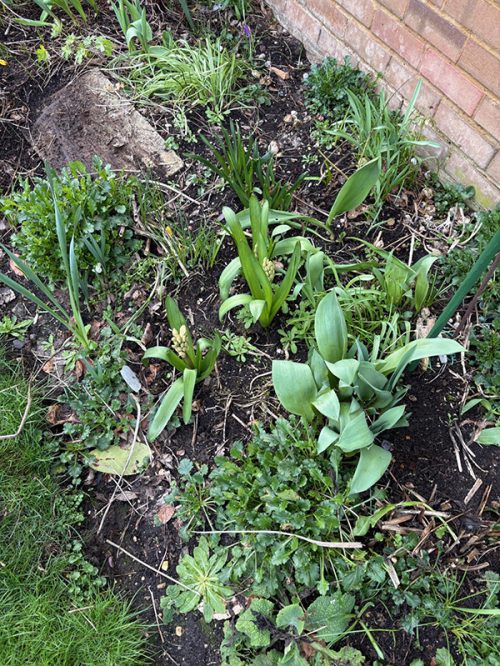
March is a pivotal time in the garden with the longer days producing more daylight and the soil warming up. This ends winter dormancy and heads into spring growth. The effort you put in now with soil preparation and pruning will determine the success of your garden or vegetable plot for the rest of the year.
If you are not sure when is the right time to start preparing your garden Mother Nature will give you some signs. If you notice the weeds starting to grow this is a good indicator that the soil is warming up and the root systems are starting to wake up.
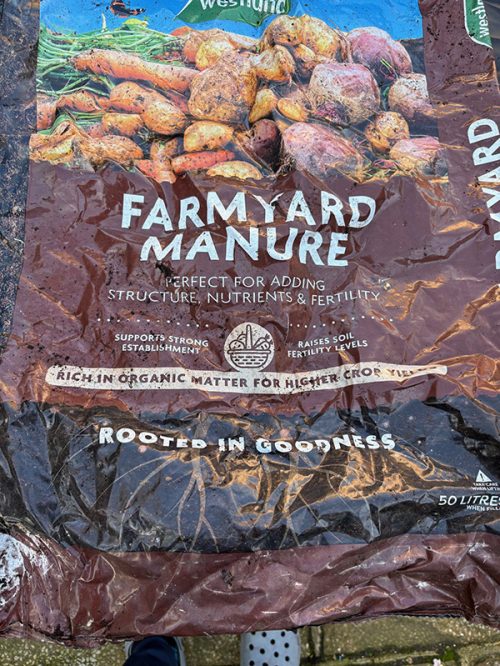
Add organic matter to your beds either bought well-rotted farm manure or compost from the compost heap.
Tidy up but don’t over do it! Cut back dead stems from perennials left over from winter. Clear debris from beds and borders making sure you leave any wildlife that maybe still sheltering in them. Pop the old material into your compost heap.
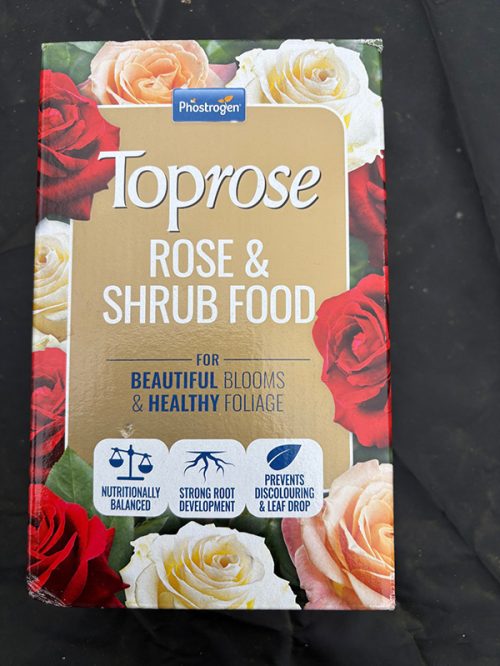
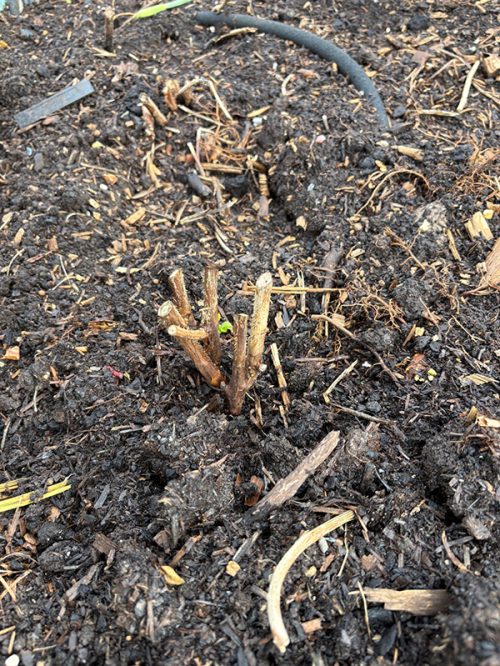
Prune roses if you haven’t already done so. Make sure you prune to an outward facing bud at an angle. Then apply a balanced fertiliser around the roots. I use Rose Care.
Also, it’s not too late to prune autumn fruiting raspberries, i.e. the ones that produce fruit from August to October. I cut mine right back to about an inch or 25mm from the soil and give then a good mulch of well rooted farmyard manure.
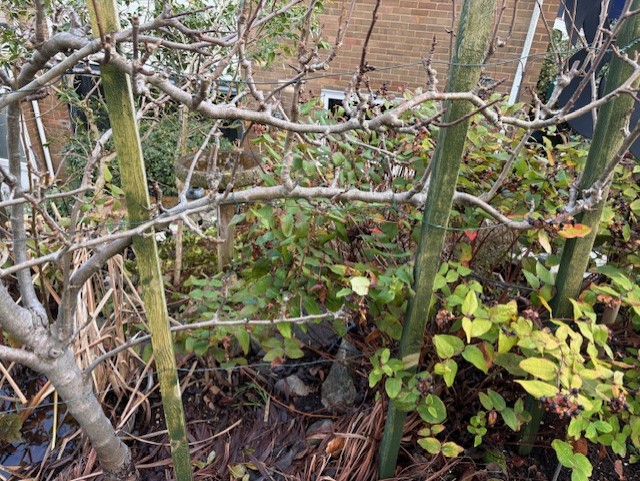
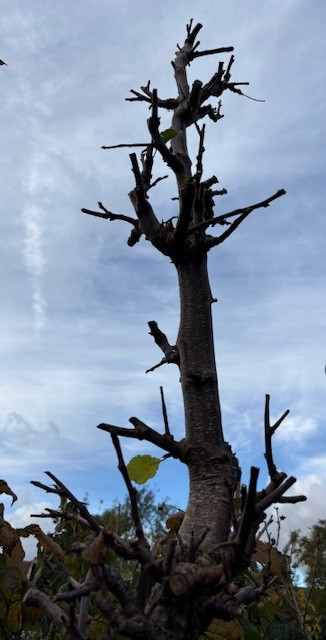
You can also prune apple and pear trees now before the buds burst open. Remove crossing branches, diseased wood and open the centre of the tree to help the airflow. Again, give established trees a balanced fertiliser.
Prune Buddleia back hard to encourage fresh flowering shoots. You can also prune hardy fuchsias and late flowering spiraea.
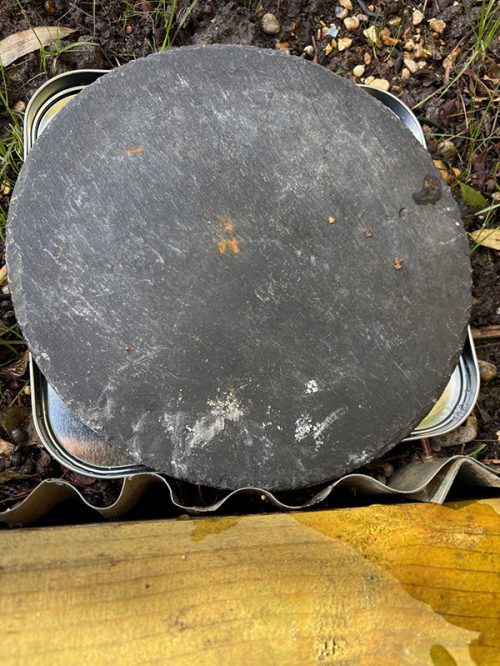
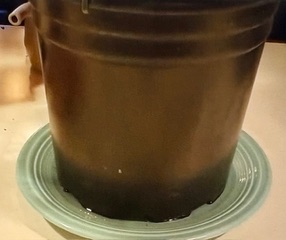
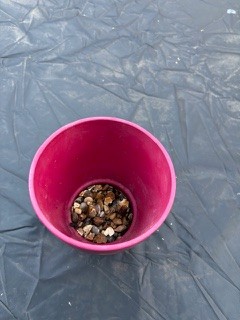
As the slugs and snails re-emerge keep them under control. I used beer traps (see picture below), or you can use biological controls from the garden centre. I would avoid slug pellets especially if you have pets.
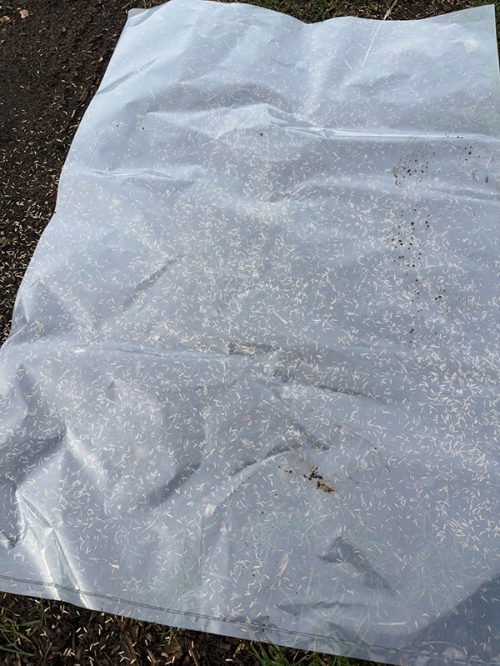
Now is an excellent time to scarify your lawn or rake it. I have an electric machine that makes the task a lot easier. Scarifying removes all the old thatch and moss and allows in more moisture enabling the lawn to breath. I then re seed the bare patches, sprinkle over some topsoil and cover this with some plastic sheeting to help the grass germinate. This also keeps the birds from feasting on your grass seed.
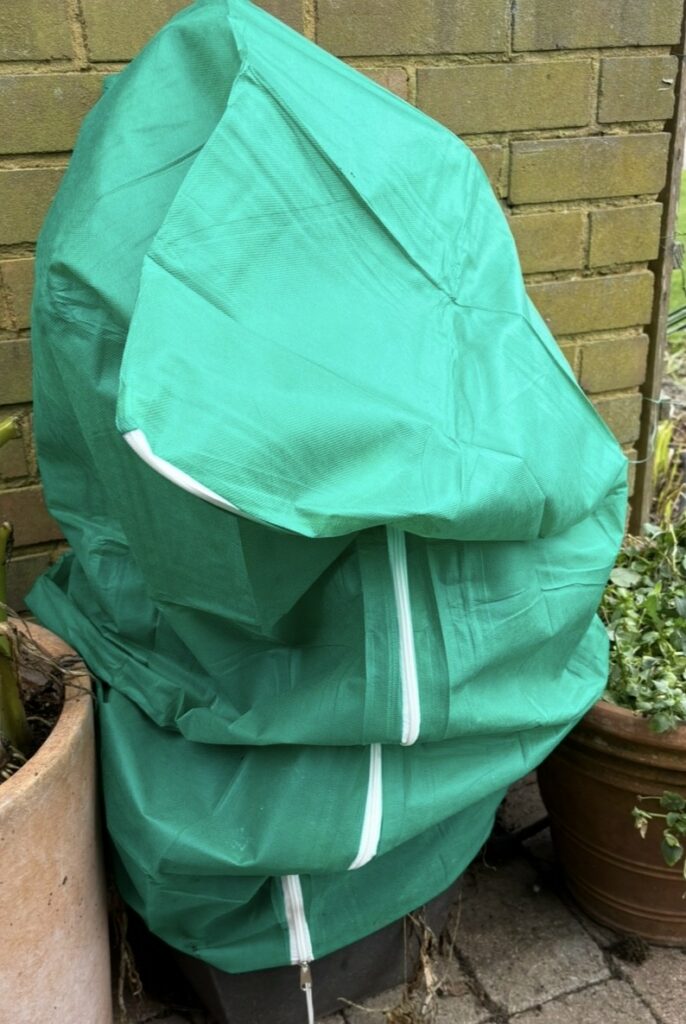
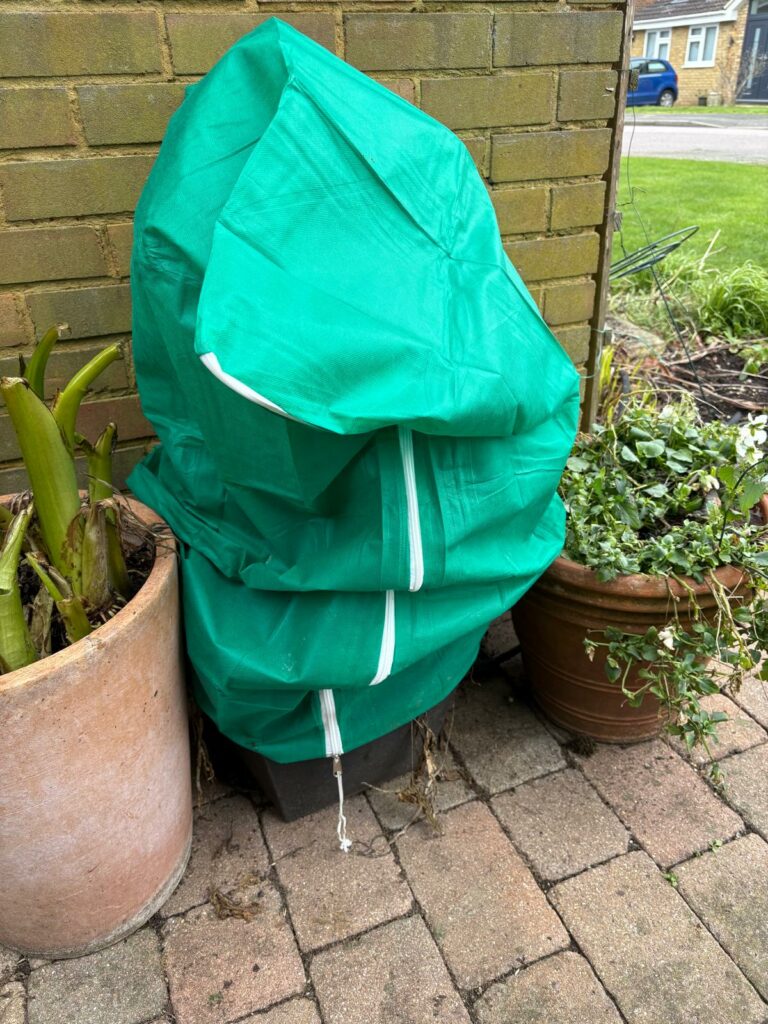
Keep an eye on the weather forecast as you can get four seasons in one day in March. Keep greenhouses and cold frames well-ventilated in warm sunny weather. Cover tender plants and seeds with winter fleece if frost is forecast. Do not prune Forsythia or camellia as this will prevent them from flowering this season.
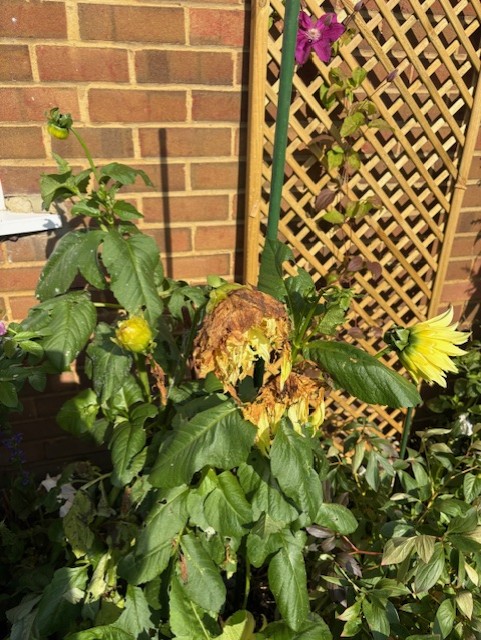
You can also pot up any dahlias you have been over wintering into pots and keep then in a light frost-free environment.
Avoid walking on wet soil and sowing too early as we can get an unpredictable cold snap which will kill off all your seedlings. Also don’t overwater your seedlings as this will just make the seeds rot.
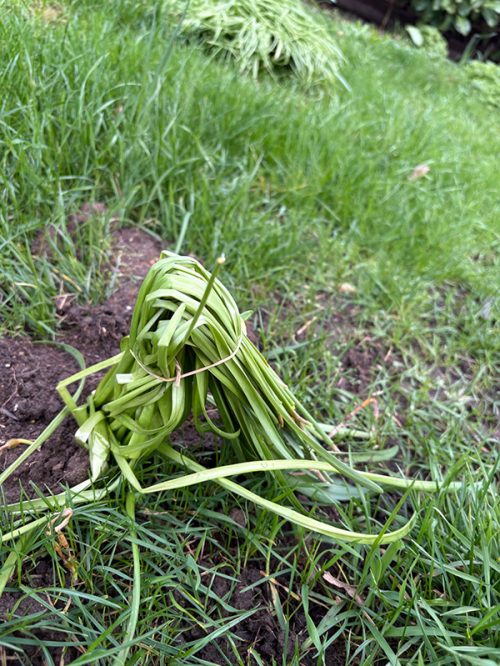
Cut off dead or dying daffodil heads and let the green foliage die back naturally this will provide food for the bulb for next year’s display. You can do what my grandfather used to do which was to neatly tie the green foliage with string or a rubber band.
THINGS TO DO THIS MONTH
Lay new lawns.
Sow carrots, parsnips, spinach, beetroot, radish, spring onions, broad beans and peas if it is not too cold.
Prick out and pot-on your seedlings when needed.
Start first early potatoes but protect the young green shoots if frost is forecast.
Plant onion and shallots sets.
Keep on top of aphids, slugs and other plant munchers.
Divide perennials.
Continue to dead head winter flowering bedding such as pansies to prolong their flowering season until you are ready to plant your summer bedding in May.
Keep on top of the weeding.
Happy Gardening!
February 2026
February can swing from one extreme to another. One day heavy rain then high winds, even snow and ice, then we can get beautiful sunshine. This month I will be making sure all my trees and shrubs are staked and tied in properly to prevent wind rock which makes the shrub or tree unstable and will let moisture get down to the roots. If this then freezes it could kill off the specimen.
Now is a good time to plant bare root trees and shrubs and this includes roses. Make sure you keep off waterlogged soil as this will compact it and alter the structure of the soil. I use a short scaffold plank to spread my weight. Dig a large hole and fill it with organic matter such as home-made compost adding some peat free compost. Back fill the hole and firm in with your heel to make sure the specimen is stable and stake it if necessary.
Now is also a good time to separate snowdrops. Divide the clumps into a manageable size then replant making sure you bury the white part of the stem down to the green area. I have not been very successful growing snowdrops. I read recently that if you buy snowdrops growing in a pot from a garden nursery or online, when they have finished flowering you can just replant them outside where you want them. This apparently is a better way of obtaining success with these lovely winter bulbs.
Why not look at what you want to enhance your garden for next winter as this month and next is an ideal time to plant new shrubs. Have a look at my winter flowering shrubs:
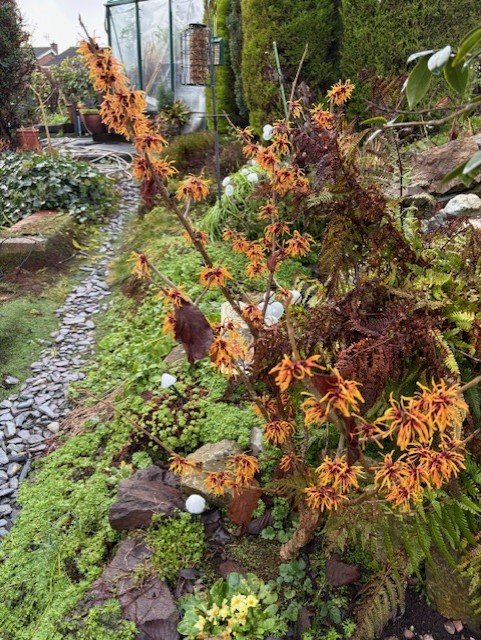
Witch Hazel: This variety is Hamamelis it has a lovely scent and flowers just after Christmas.
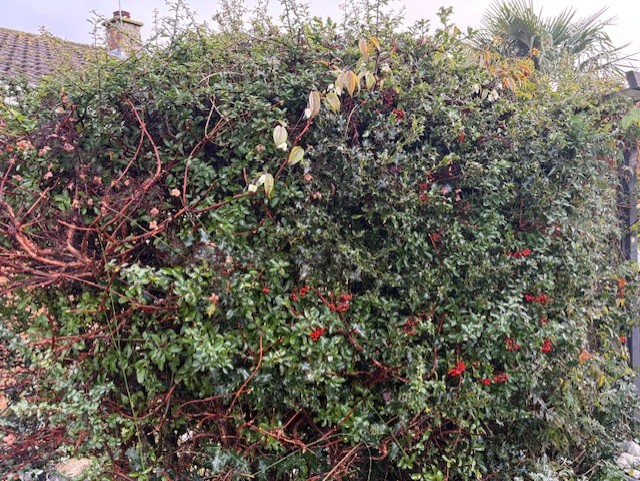
Pyracantha: This variety is Scarlet Firethorn and it is an excellent feeder for the birds in winter. Holly: Usually you need a male and female variety to guarantee berries, again an excellent food source for the birds in winter.
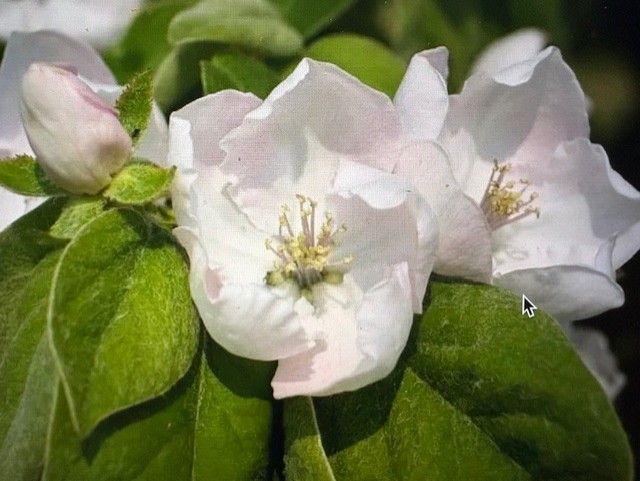
Japanese Quince: Lovely red flowers in the winter that turn into quince fruits in the autumn which can make delicious jam.
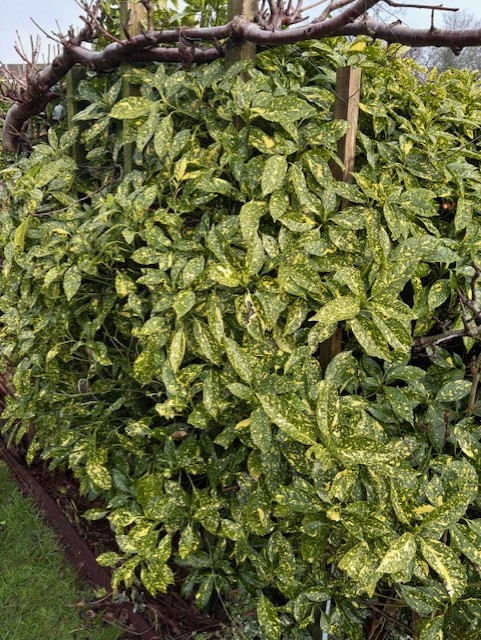
Japanese laurel: This has interesting foliage to enjoy in the bland winter months.
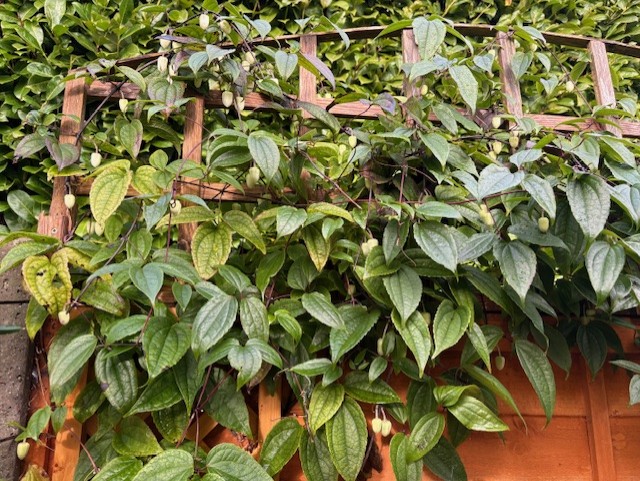
Mountain Clematis: This is a climber that flowers late February into March.
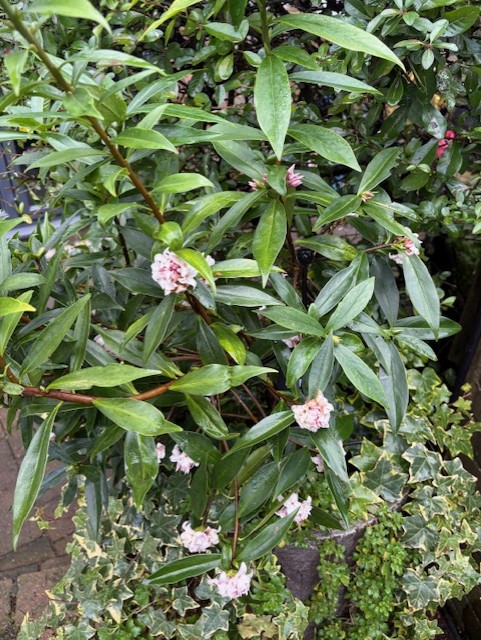
Winter Daphne: One of my wife’s favourite winter flowering plants, which gives off a lovey aroma. We have planted a couple outside our patio doors.
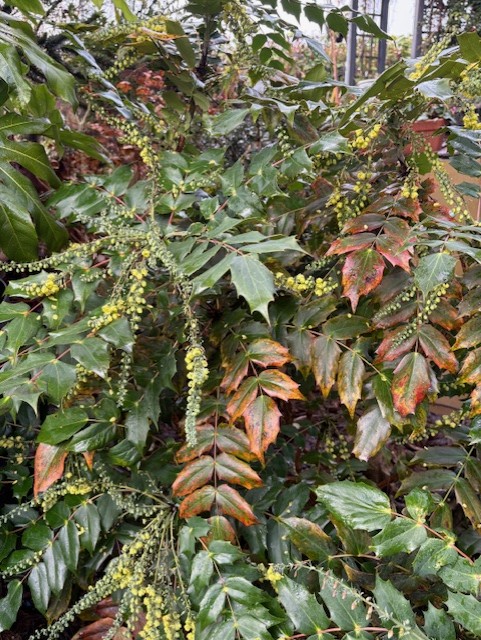
Leather Leaf Mahonia: Likes shade and produces a beautiful yellow flower in February.
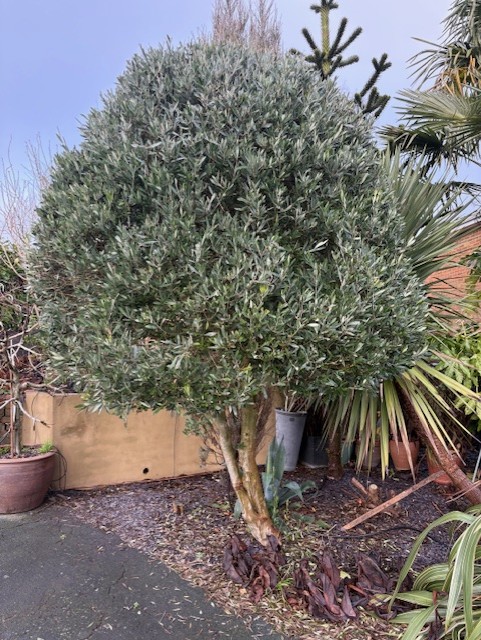
This is surprisingly hardy – I have mine in my Mediterranean garden, which is south facing, and I prune it into a lollypop shape. Unfortunately you won’t get any edible olives in this country, but who know with climate change?
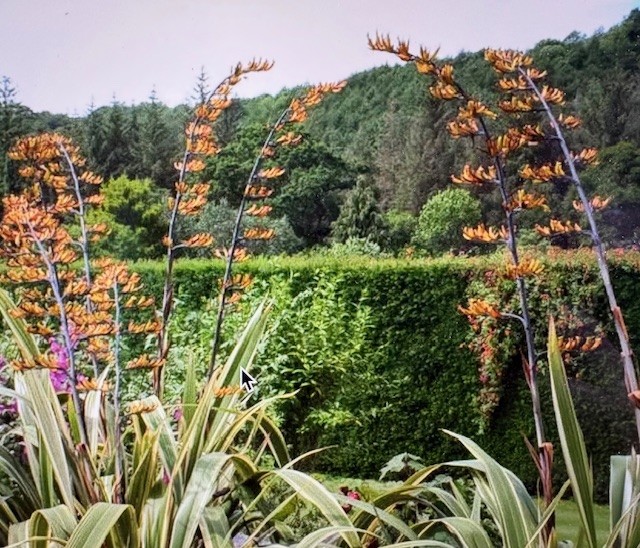
New Zealand Flax: This is an evergreen that has interesting foliage producing long flower stems in the summer.
THINGS TO DO THIS MONTH
Prune/move autumn raspberries.
Prune overgrown hedges and trees.
Buy and plant Asparagus plants. Dig in lots of good compost with grit as they don’t like their roots waterlogged.
Cut back ornamental grasses close to the ground.
Plant shallots & garlic.
Prune Buddleia as hard as you like. Or light prune if you are happy with the shape.
Prepare runner bean trenches by digging in plenty of organic matter and manure.
Force rhubarb.
Use chicken pellets in all areas.
I will leave sowing any seeds this month as they tend to grow very leggy this time of year. Apart from Chillies and aubergines.
Happy Gardening!
January 2026
So, we are in the New Year 2026. Why not make some gardening New Year resolutions? Here are some ideas for you…
Make a Pond
This is very easy to do. You can just put a washing up bowl in the garden and in no time at all you will find all sorts of creatures living in a relatively small amount of water. This is also a great way to encourage youngsters to get involved with nature. Maybe even ask them to keep a record of what they have seen in the new addition to your garden.
You can use anything to create a pond. I have four; one at the allotment and three at home. I have a Koi carp pond which is a mid-sized pond made with a pond liner. This is a metre deep and has two waterfalls running into it which are connected to filters as Koi carp are quite dirty fish.
I also rescued an old plastic water tank which I dug into the ground and filled with water. This is called our frog pond; it has no filtration, but I have planted some yellow flag (Iris pseudacorus) in it and rigged up a solar aeration system that helps the water stay healthy when the sun is beating down in the summer. If you aim to attract frogs, toads or newts make sure they can climb out of the pond easily.
Create a Compost Heap
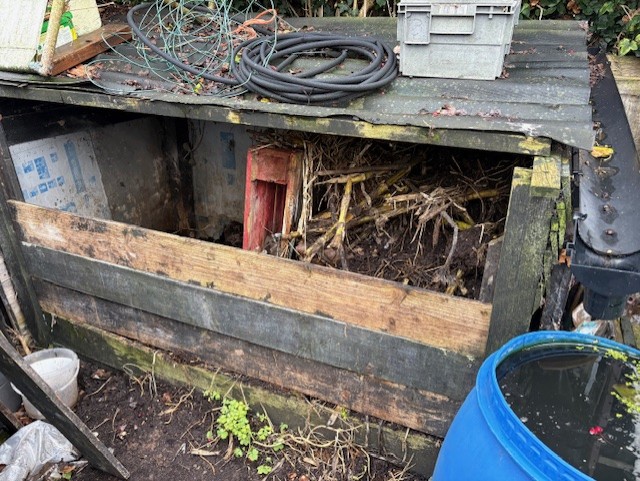
Introduce a compost heap in the garden which is so easy to do. You can buy the plastic ones quite reasonably or you could make one yourself. At the allotment I made two with old pallets. They have bitumen roofs with holes drilled to keep the compost damp and sliding slotted planks that can be easily removed to access the rotted compost.
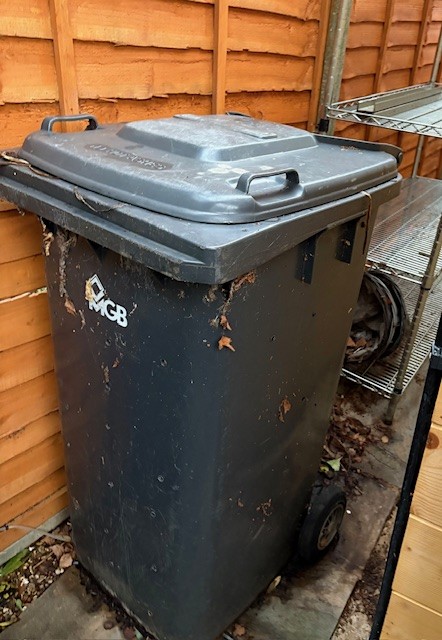
I also have a few old wheelie bins with holes drilled into the sides; these are easy to tuck away out of sight and move to where you want to tip out your compost.
To create the perfect compost all you need to do is to gather all your waste veg, eggshells, grass cuttings, small twigs, any garden rubbish you accumulate and pop it in the compost bin. It is also important to mix what the experts call brown waste. This mainly consists of old newspapers and cardboard. I even use the contents of my shredder which is ideal as the paper is cut into small pieces and mixes well with the other medium. Keep the heap moist, not drenched or bone dry, and this will help the rotting process. I empty mine twice a year once in the spring and again in the autumn enabling me to spread well-rotted compost all over my garden and allotment for free!!
Set up a Wildlife Camera
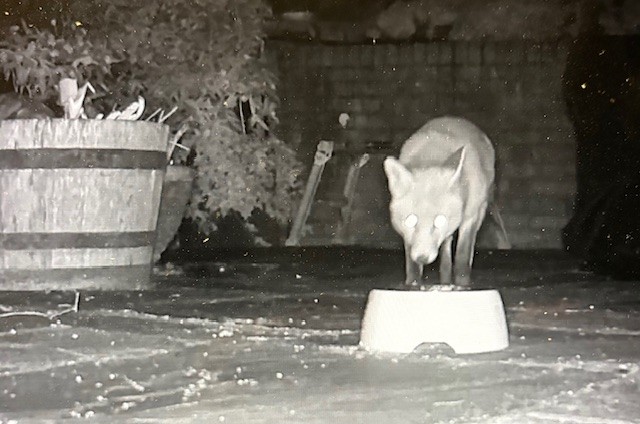
My Sister-in-Law brought me a wildlife camera for Christmas. This was a fantastic gift as I love wildlife. I have had it at the allotment and seen various foxes and even a badger. We have started to leave out left-over meat in a dog bowl for the fox to eat at night and then we then watch the footage in the morning. We call him Dave the fox.
Install a Water Butt
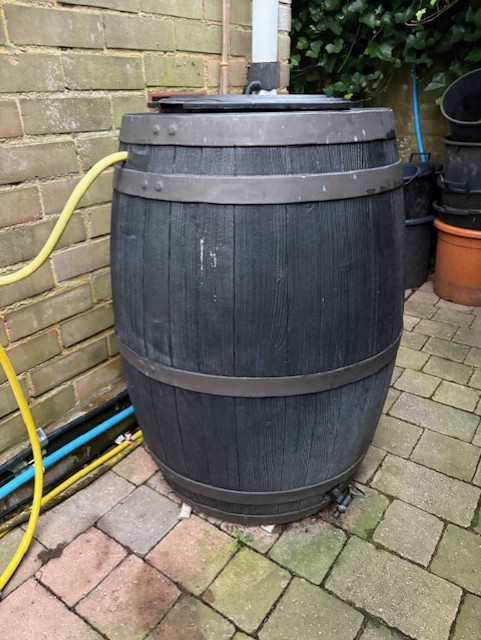
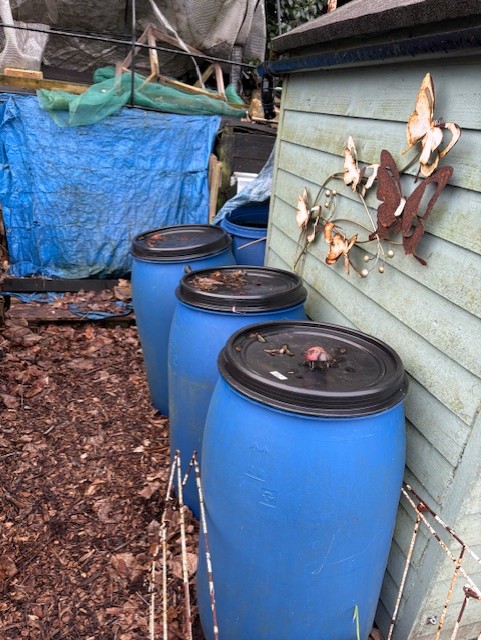
Why not install a water butt or even increase the number you already have – you cannot have too many, particularly in the summer. Although these containers may not be aesthetically pleasing, I have invested in two high-quality plastic imitation barrels for my garden, which are considerably more attractive than the fourteen barrels located at my allotment.
Start a Gardening Journal
How about keeping a journal and noting down at the end of each month what you like and what works in the garden and take some pictures. This is a great way of planning what you want to do the following year. Then on a cold January day when it is pouring with rain or too cold to go outside you can sift through your notes and pictures and make plans for next season.
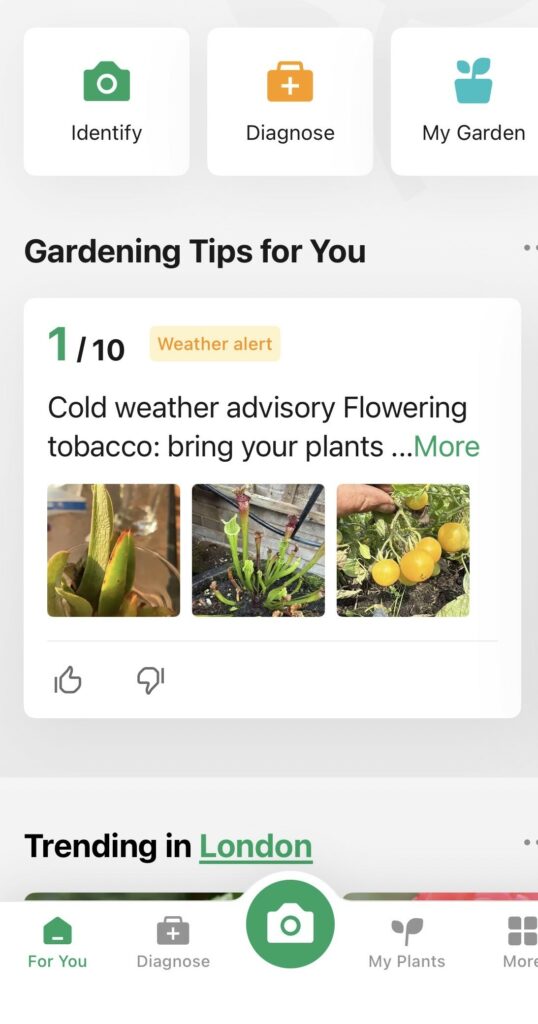
I personally use an app called “Picture This” and I find it invaluable. If I see a plant, flower, shrub or tree I particularly like I take a picture of it using the app. It then scans the picture and tells me what the specimen, is how to care for it, where to plant it, how easy it is to grow and what soil it prefers. Then if I still like it, I can add it to my favourites.
So, when we go to the garden centre, I just refer to the app. It costs around £40 per year but the way I look at it this is only £3.33 a month and I think it is well worth the investment.
THINGS TO DO THIS MONTH
Keep your bird feeders topped up and clean.
Keep dead heading winter bedding plants.
Ventilate your green house or cold frame when it gets warm as this will help prevent mould and disease.
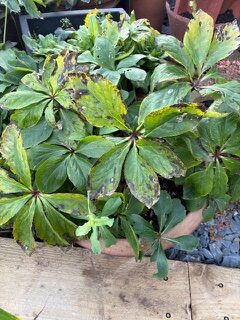
Trim Helleborus so you can enjoy the blooms.
Start forcing rhubarb – cover established crowns with an upturned bucket or box to exclude the light. This will produce sweet pink stems to harvest in about 3 to 4 weeks.
Prune blackcurrants.
When your indoor house bulbs have finished flowering why not plant them in the garden for a display next spring.
Plan your crop rotation for next year at the allotment or veg plot and keep a record to help you in following years.
Keep off the soil and lawn when wet or frozen.
Brush off snow from shrubs and trees. As snow can be heavy and damage your plants.
Happy Gardening!
December 2025
Christmas is nearly upon us. Many of you will be looking at purchasing a Poinsettia for a little festive cheer. Here a few tips on buying and caring for your plant.
Poinsettias come in many varieties of colours, the traditional red, pink and, my wife’s favourite, white; they can also have speckled leaves.
Once you have chosen your poinsettia it is important you keep it warm as this plant originates from Mexico.
Once you get the poinsettia home make sure you place it in a place where there are no drafts, not above a radiator or in direct sunlight. These plants like dappled shade in the wild. Also, another cause of losing poinsettias is to over-water them. I place my finger in the pot to about an inch deep (or 25mm in new money) and if it is dry I take it to the kitchen, place it on a saucer and water it until water drains out of the bottom onto the saucer.
Poinsettias like humidity and you can create this by placing the pot that the plant is in, into a decorative pot with some stones or grit at the bottom. Water this so that the water does not go above the stones and this will create a mini spar for the plant.
It will thank you for this but make sure the main plant pot does not sit in water as this will kill off the plant. Don’t forget to remove any discoloured leaves from the plant. Try to keep the plant in a temperature zone between 18 and 24 degrees centigrade.
If you want to be adventurous you could try to keep the plant for next Christmas, though this does mean a lot of faffing around.
In the Spring prune the plant back quite hard to about 4 inches/ 100mm. Feed with a general house plant fertilizer once a month. Keep in a draft free area still in the temperature zone of 18 to 24 degrees Centigrade.
When the summer arrives you can place it outside in a semi shaded spot but the temperature at night should not go below 12 degrees.
Come September bring it indoors and place the plant in a cupboard or put a cardboard box over the plant for a minimum of 14 hours a day. Do this for 8 to 10 weeks and this will make the leaves turn the required colour for Christmas.
Good luck
THINGS TO DO THIS MONTH
Plant rhubarb and add some well-rotted manure to existing plants.
Cut back raspberries.
Dead head winter bedding plants such as violas, pansy and cyclamen. This will encourage new blooms.
Cut off Hellebore leaves that have black spot this will encourage flowers to form.
Plant bare root shrubs and roses as long as the ground is not frozen.
Keep off the lawn if it is sodden or frozen.
Keep your pond frost free; I use a tennis ball or a half-filled plastic milk bottle when there is ice on the pond and just lift out. DON’T crack the ice with a broom of any other device.
If it snows brush off the snow from shrubs and trees with a broom. It is surprising how heavy snow is and it can damage your plants.
Don’t forget to feed the birds and make sure they have a place to drink if we get heavy frosts.
Happy Gardening!
November 2025
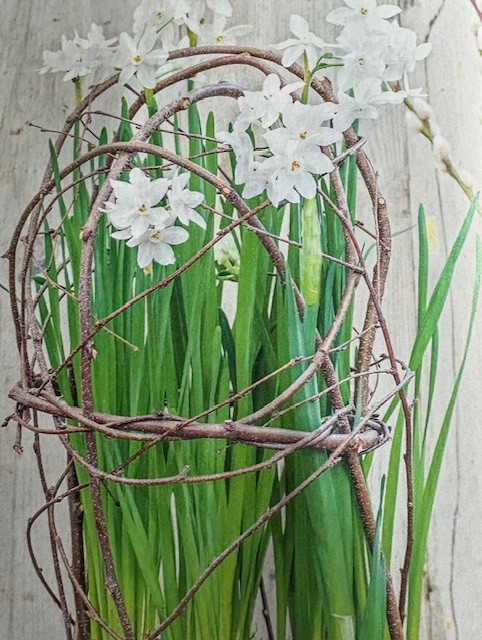
We still have until the 21st of December until winter is officially on us. So while the soil is still relatively warm there are still jobs to get done. Mainly planting bulbs. Plant daffodils – my favourite are Paper Whites.
Tulips need a well-draining soil, peat-free compost with plenty of grit and, if planting in pots, keep the pots elevated off the ground. They don’t like waterlogged soil as the bulbs will rot.
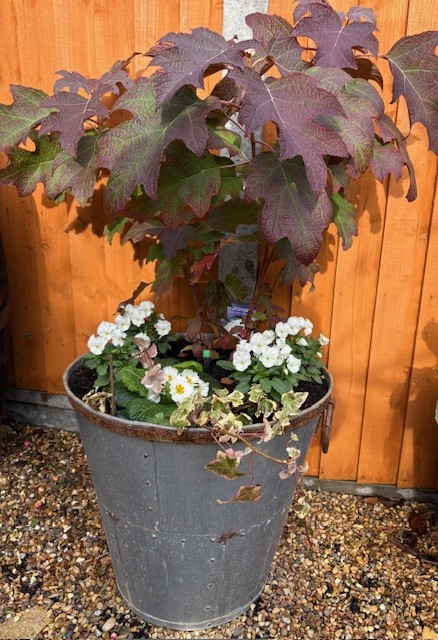
I make my own winter flowering pots and hanging baskets. I plant different bulbs in each container or basket with some winter flowering violas, a little ivy to hang over the edge this will give you something to admire over the winter months well into the late spring when it will be time to change the for summer bedding.
A lot of people don’t bother with this. I find this difficult to comprehend as you can have an extra 6 months or so to add some colour until it is time to change them over to summer bedding in mid to late May.
I leave my perennials in situ and don’t prune them until the spring. This gives the small insects like ladybirds somewhere to keep warm and sheltered in the cold wet winter months.
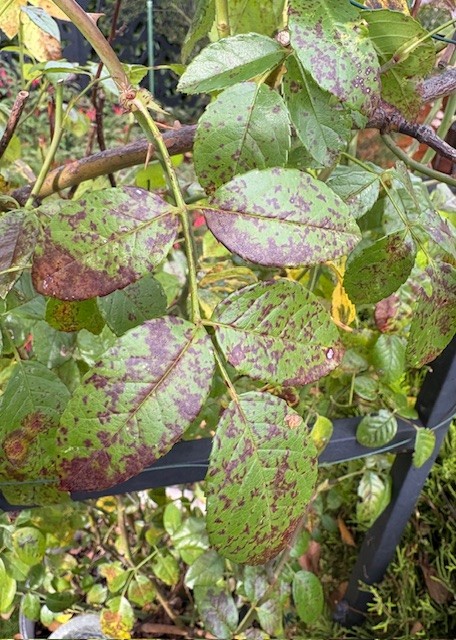
I prune my roses now – this saves a job in the Spring and prevents wind rock which will make the rose bush unstable. However, if you are happy to do this in the Spring you may get some blooms right up to Christmas. It’s entirely up to you. I will also cut off all the leaves of my roses that have got black spot and rake up the fallen leaves. As this will help disperse this fungal disease. Incidentally now is a good time to plant bare root roses.
Tie in climbers as the Autumn and Winter storms will damage them. Prune apple and pear trees once the leaves have all fallen off the tree allowing the air to circulate to prevent diseases.
I will also keep an eye on the weather forecast and when a frost is due, I will fleece my tender plants that I don’t have room for in my greenhouse.
I will also rake off the fallen leaves and place in my compost bin or you can put them on a plastic bag (a hessian bag is better) as long as you pierce some holes in them to keep the air circulating within the bag then place them in a corner where they can rot down to use in the Spring or next Autumn. If you are planning to have a bonfire on Guy Fawkes’ night, make sure there are no hedgehogs hiding with in the pile, as hedgehogs are becoming increasingly rare in this county now and they are a friend to the gardener as they feast on mainly slugs in the growing season.
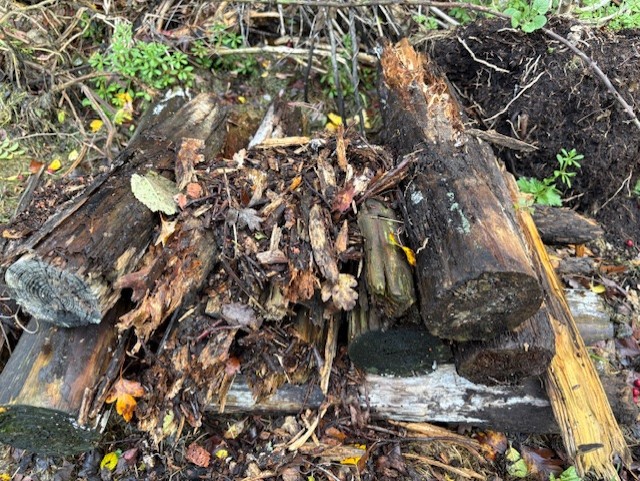
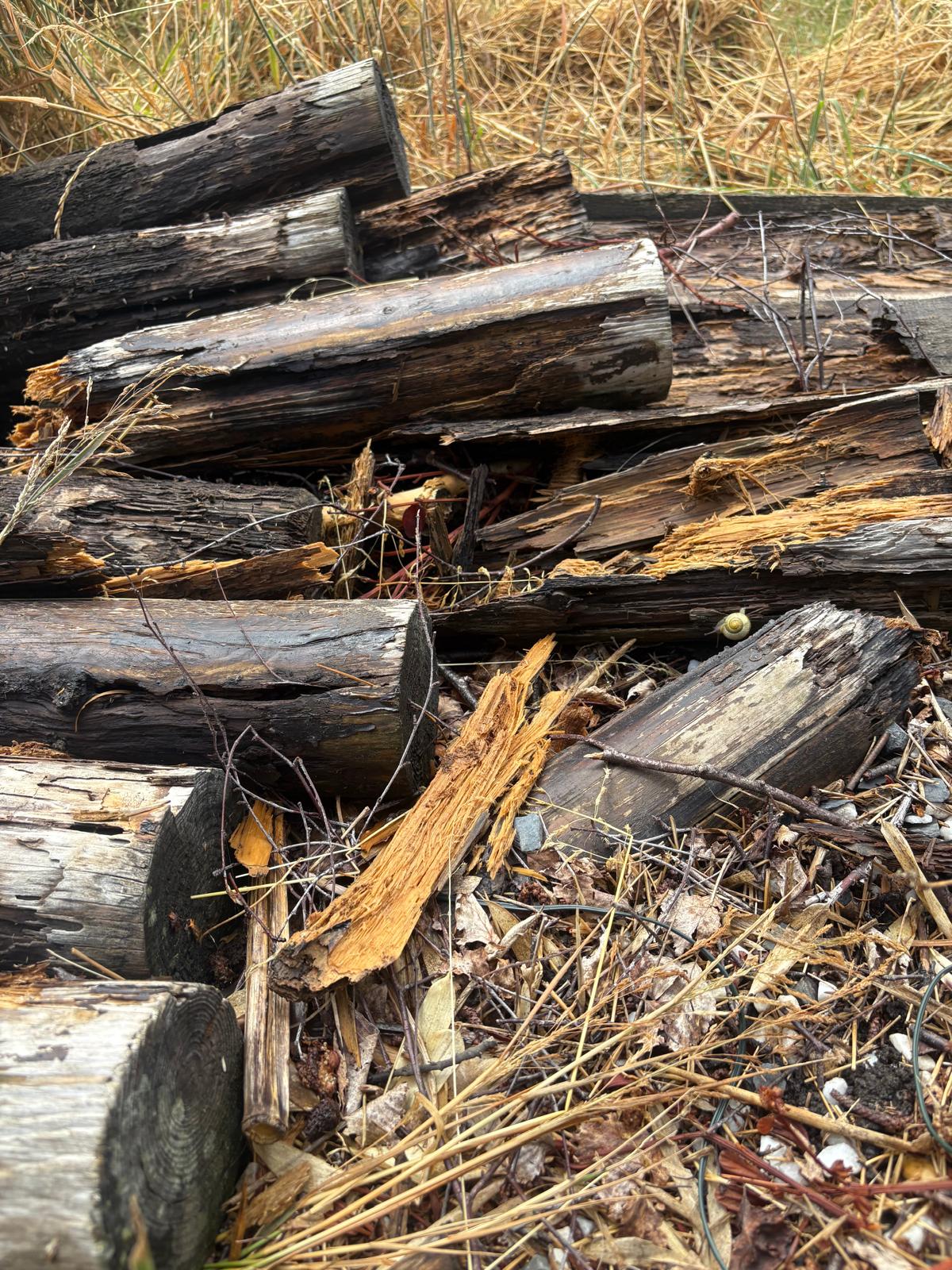
I will also make a small amphibians’ shelter for frogs. This will consist of a pile of logs, and I will fill in the gaps with wood chip of bark and some soils to protect them.
THINGS TO DO THIS MONTH
Harvest Parsnips.
Sow broad beans (although I leave sowing mine until the spring).
Plant Garlic if you haven’t already.
Keep bird feeders topped up.
Keep off the lawn if waterlogged.
If we get a mild spell, I cut my lawn with the blades at a winter setting this will also save you from raking up the leaves as they all end up in the grass box.
Fish out the leaves from the fishpond as they will rot down in the pond discharging chemicals that are harmful to fish.
Happy Gardening!
october 2025
We are now officially into Autumn. The cooler temperatures and less daylight will diminish our plants veg, and shrubs. Growth will now slow and they will gradually die down after the first frosts, probably by the end of this month or next. This month is a good time to start clearing the garden, or as my old grandad used to say, “putting the garden to bed”.
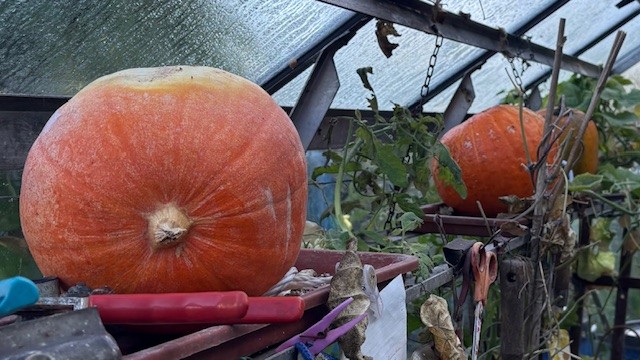
I have picked my pumpkins (grown for the grandchildren), dried and cleaned them and placed them in the green house to harden off the skins.
All ready for the grandkids to make their Halloween display at the end of this month.
I have cleared a few beds up at the allotment and composted the remnants of; pumpkin; cauliflower (very disappointing this year); sweet corn; broccoli; runner beans. Make sure you take all the runner beans off the plant when you compost them, or you will have runner bean seedlings grown everywhere when you spread your compost next spring. I like to collect my excess runner beans and keep them in a frost-free dark place and use them as seeds for next year.
I will keep dead heading my roses and dahlias. This will encourage them to keep flowering until the first frosts arrive.
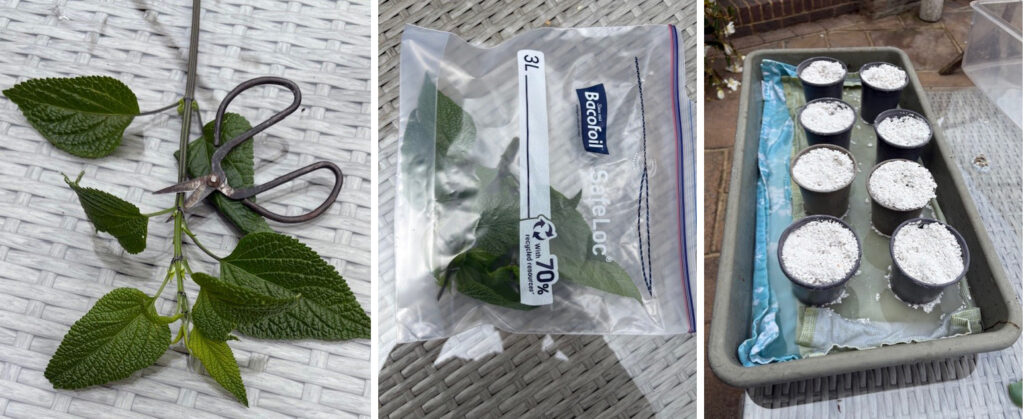
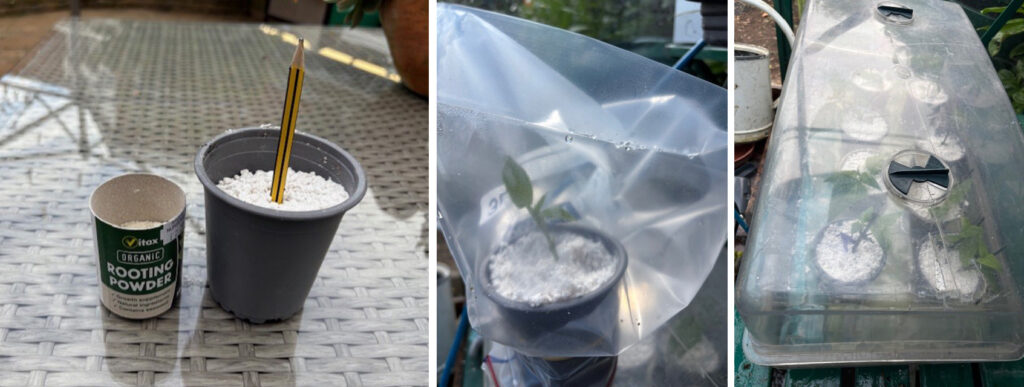
This time of year is a good time to take cuttings of Salvia. Here is a step-by-step guide on how I take mine:
Pick a non-flowering stem and cut with a pair of sharp scissors or a knife just below a leaf node.
Pop them into a plastic bag to stop them drying out.
Fill a small pot with very gritty compost or as I do use vermiculite or pearlite.
Take off most of the leaves as you want all the energy to go into producing roots.
Water your soil/vermiculite and make a small hole with say a pencil.
Dip the cut end into hormone rooting powder and place in the pot.
Now put a plastic bag over the pot making sure it is big enough so that the leaves of the cutting don’t touch the plastic as this will rot the leaf. Place a rubber band around the pot and this will create a humid environment for the cutting to root.
Or you could use a propagator if you have one.
Make sure the pot remains moist and after about 5 weeks the cutting should have rooted. You can now plant into a peat free compost with plenty of drainage. I mix in Vermiculite with the compost, or you could just use grit. Place in a cool light frost-free environment; a greenhouse or cold frame, and by the spring you should have some free new plants.
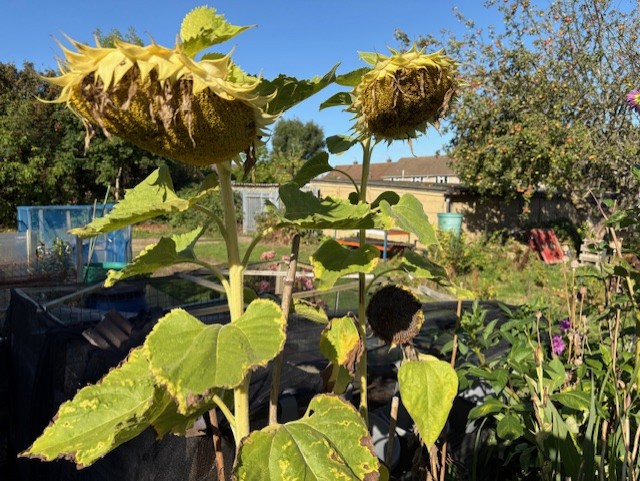
I have removed my sunflowers, chopped up the stems and placed them in the compost heap. This will help them rot down quicker but I do save the seeds for next year’s planting. Any seeds I have left I keep to feed the birds.
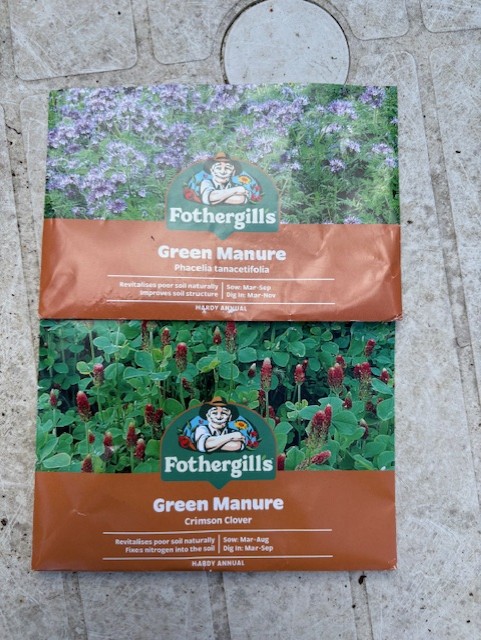
I have just planted some green manure in one of my beds at the allotment. I sowed this into the ground and raked it in. This adds organic matter, suppresses the weeds, and replenishes the soil with vital nutrients like nitrogen. I will then rake this into the soil in the spring. As this has been sown into one of my no-dig beds, I won’t be digging it in.
THINGS TO DO THIS MONTH
Move your house plants closer to the natural light, preferably not draughty or above a radiator.
Reduce mowing the lawn and raise the blades on the mower.
Compost summer hanging baskets and plant winter ones with bulbs and winter pansies.
Clean bird boxes for next spring.
Tidy up ponds. Remove any blanket weed and dead or browning water lilies. Prune any plants if they have grown too large.
Clean and tidy the green house or cold frames. I clean all the windows with a diluted mixture of white vinegar and use a diluted solution of Jeyes Fluid to wash all the benches and floor down. This will kill off any pests that could cause a problem next spring.
Divide established rhubarb to make more plants.
Plant garlic and spring cabbage.
Cut down asparagus foliage to the ground.
Happy Gardening!
September 2025
Well, what a hot dry one last month was! I hope all your plants and Veg survived. I am writing this article in the middle of August so it is very difficult to predict what the weather will hold for us in September. If we don’t get much rain why not think about using grey water? What is grey water I hear you ask? It is discarded used water, say dish water or even bathwater. A couple of years ago I rigged up an old pond pump and put it in the bath when I had finished bathing and pumped all the used water in to a water butt. It worked, however after a week my long-suffering wife put her foot down and rightly banned the array of extension leads, hose pipes and the pump from the house!!
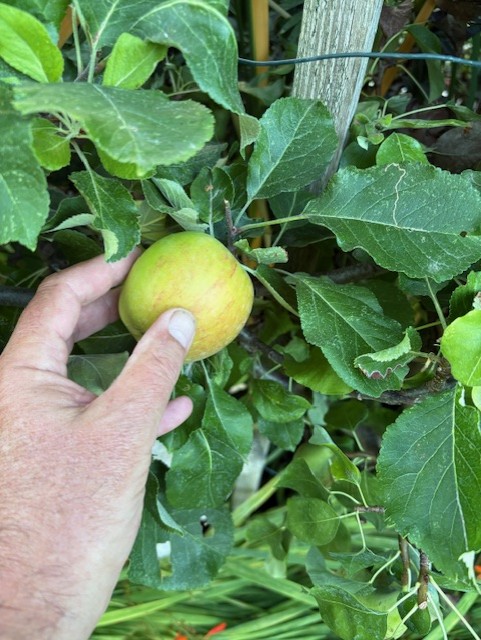
September and October are traditionally harvest months. I will be picking some of my apples and pears. I just hold them with one hand and make a half a turn twist of the fruit, if it comes of easily its ready, if not leave it for another week or so. PIC 1 I wrap them up in old news paper and store them in a cardboard box somewhere cool and dry.
I wrap them up in old news paper and store them in a cardboard box somewhere cool and dry.
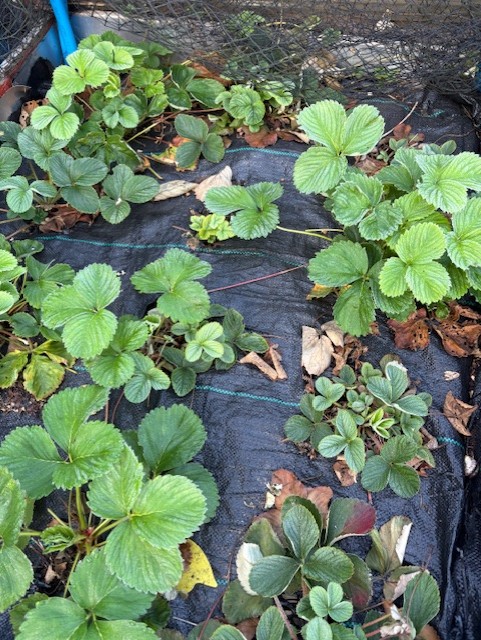
I want to focus on strawberries in this issue. Although strawberries won’t be fruiting for at least another 8 months or so now is a good time to plant new plants or increase your stock from existing plants. I love strawberries and have 4 beds at my allotment and various containers doted around the plot and my garden. They are so easy to grow. Just buy a small plant from a garden centre or online. Plant them in a pot, container or in the ground. If you are going to make a strawberry bed what I do is to peg a membrane down, cut various holes in the membrane and plant the strawberries in the holes. Make sure you use good soil as strawberries like rich soil. I use a good quality peat free compost mixed with some horse manure and garden compost.
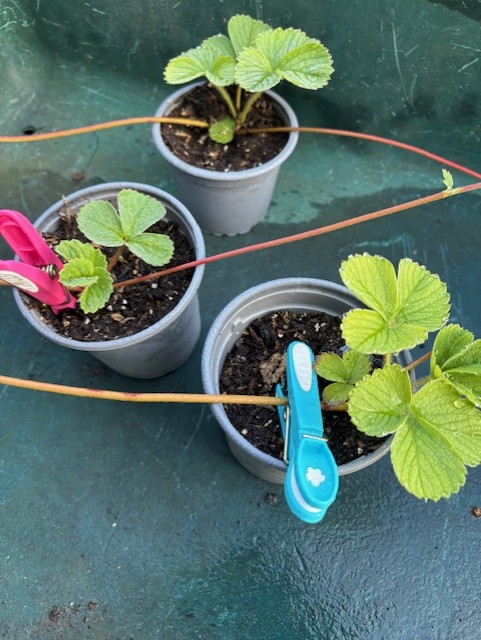
If you already grow strawberries, you will notice they send out runners this time of year. I fill a small pot with compost and peg the runner into the pot. Make sure it doesn’t dry out and within a month you can cut off the runner and you have a new plant.
If you already grow strawberries, you will notice they send out runners this time of year. I fill a small pot with compost and peg the runner into the pot. Make sure it doesn’t dry out and within a month you can cut off the runner and you have a new plant.PIC3. I will also be cutting off all the brown leaves to encourage new growth. Then look forward to May and June next year when hopefully the harvest will be as good as it was this year. Remember Strawberry plants are best replaced every 3 to 4 years.
THINGS TO DO THIS MONTH
Keep dead heading to encourage new flowers.
Cut back long grass and meadow grass remove the grass and put in the compost heap.
Trim evergreen hedges.
Water your green house or cold frames in the morning to prevent fungal problems this time of the year.
Tidy up ponds.
Prune raspberry and blackberries.
Re seed or re turf lawns.
Plant onion sets and sow spring cabbage.
Plant Christmas Hyacinths.
Stake plants and bushes as it can get very windy this and next month.
Walk around your garden with a notebook and take notes on what has worked and what hasn’t. I also take photos to refer to when planning what to plant next year.
Happy Gardening!
August 2025
As the children’s summer holiday are upon us, I thought it would be a good idea to concentrate on the children in this issue.
I am passionate about encouraging children to garden. Not only is it good for them to be outside in the fresh air, it also great for inquisitive minds. When I take my grandchildren to my allotment, they now have learned that vegetables don’t come from the supermarket but that they are grown from seed in the soil. They can also identify what vegetables look like above the ground. I love to see their faces when they pull a carrot or dig up some potatoes then take them home for Nanny to cook.
You don’t need a big garden to encourage children to get involved with gardening. If you live in a flat, you can plant a pot on the windowsill or a container on your balcony to get them interested. Or you could take a trip to a local park for a picnic and make daisy chains or pick some flowers and press them.
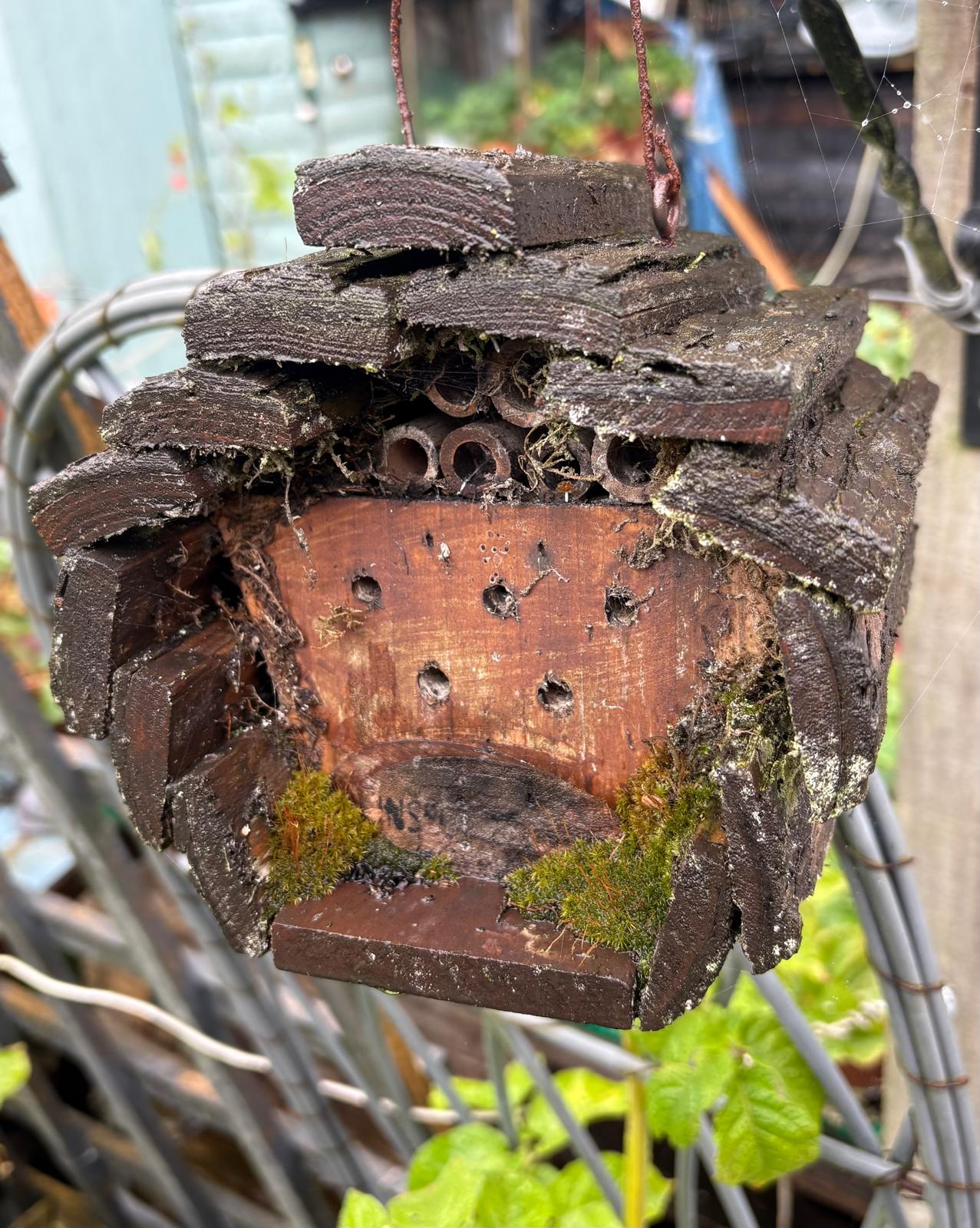
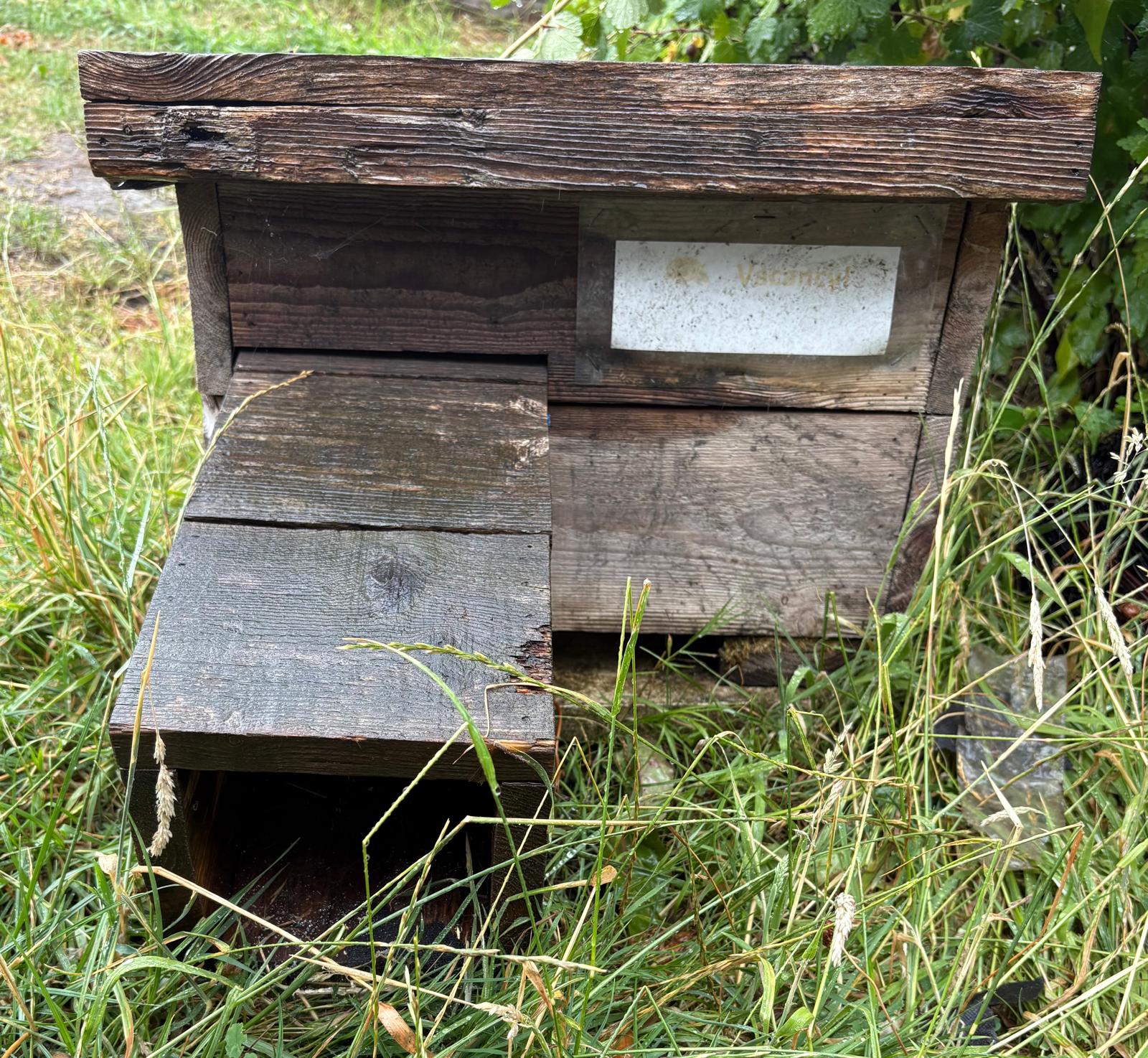
I have an insect hotel at home and at the allotment also a hedgehog house. Which unfortunately is still vacant.
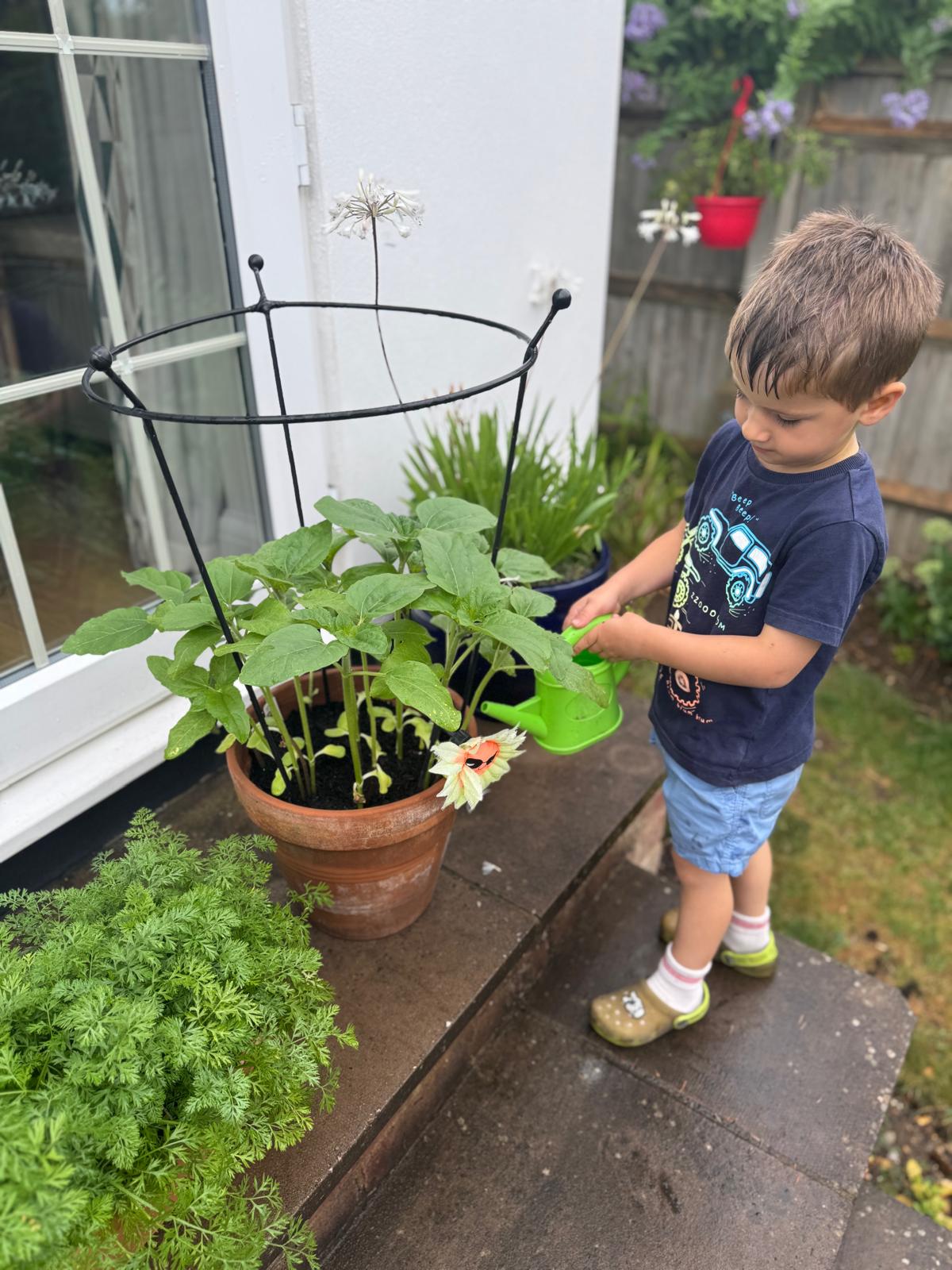
If you have room, why not give a small area to your little ones or even a larger plot to your teenagers. They can grow all sorts of interesting plants and vegetables. The children of a good friend of mine planted sunflowers only 3 weeks ago and I was amazed how quickly they have grown.
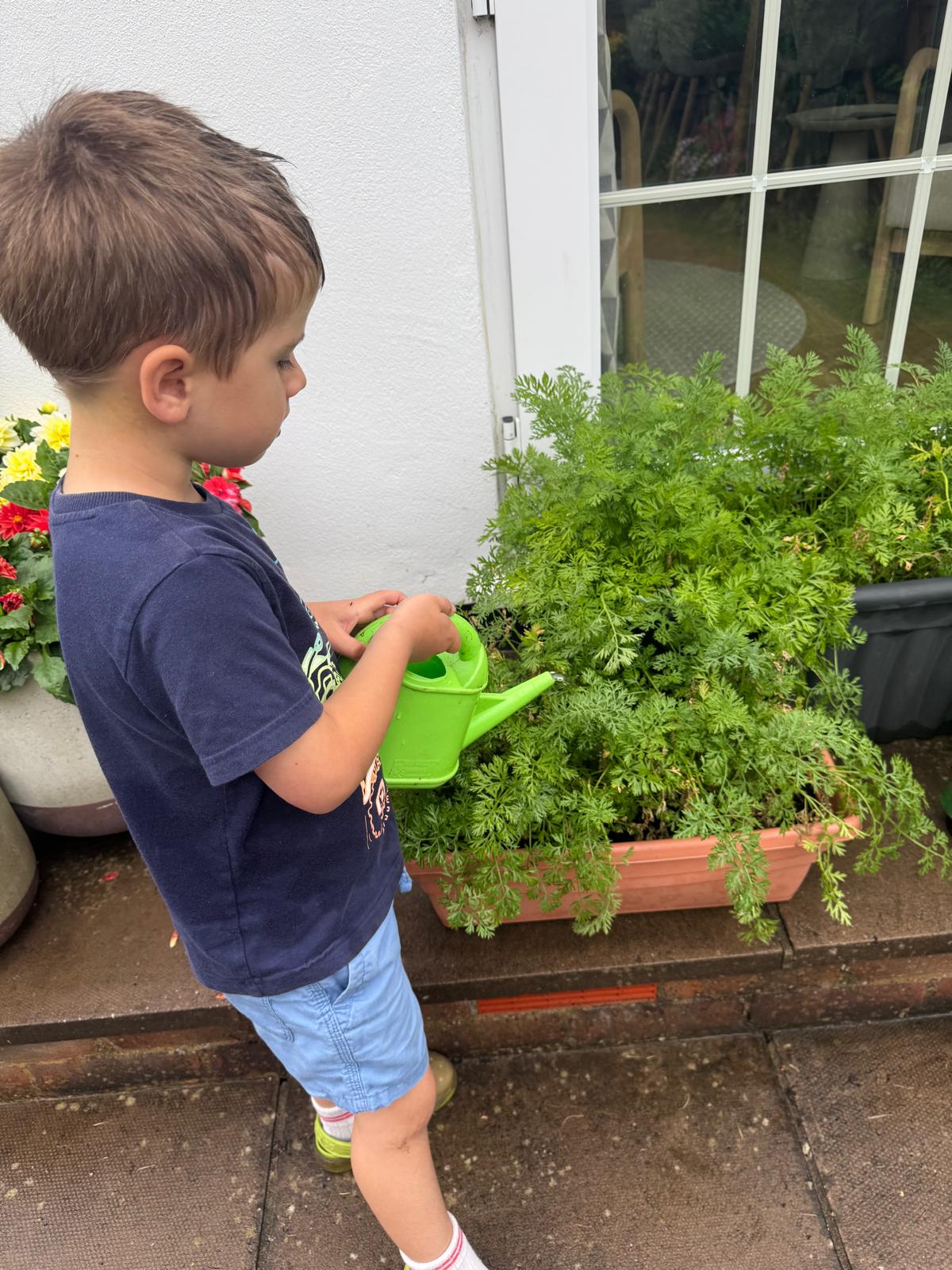
He has encouraged his four-and-a-half-year-old Archie to plant some carrots from seed and Archie is responsible for watering them giving him an insight into how thing grow and taste.
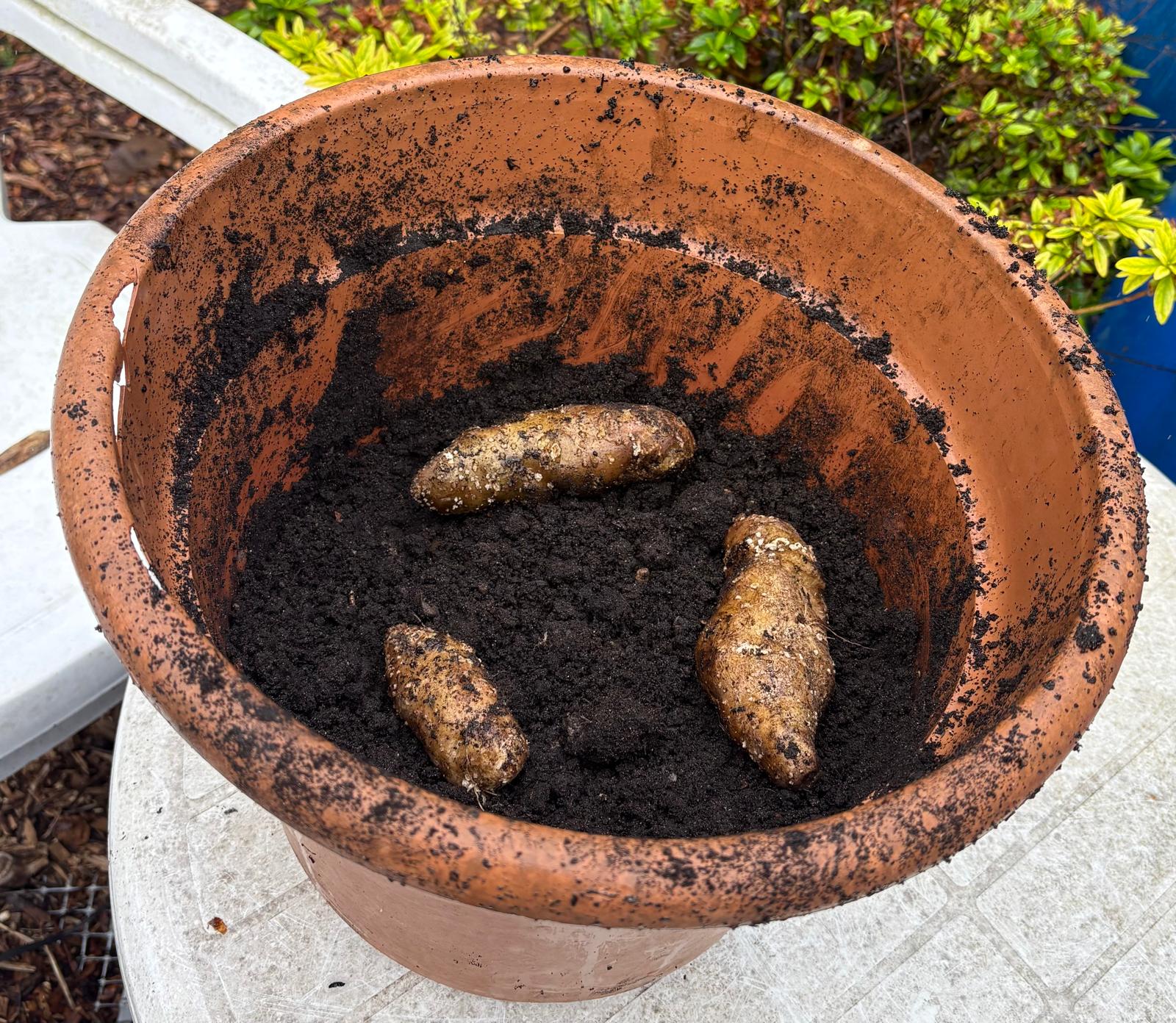
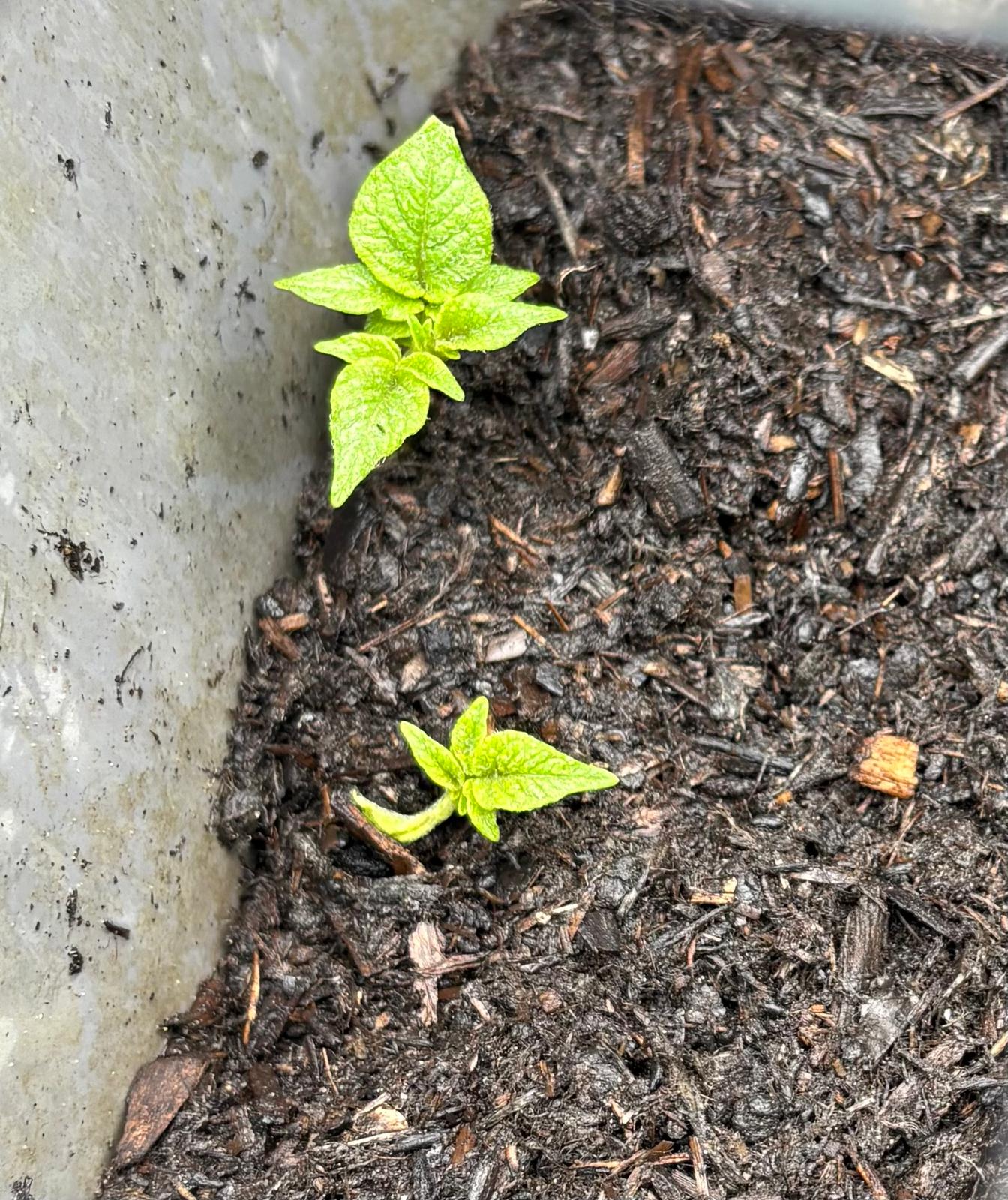
If you have small children and you want some quick results why not grow some of the following as they will be ready to harvest in no time: radishes, cress or mung beans. If you were to plant maincrop potatoes now you could be eating them by October. Plant them in a container no shorter than 60cm (or 2 feet in old money). Half fill the container with peat free compost and plant the potato or more if you have the room. Cover with about 10 cm of soil keep well-watered. When the shoots appear above the soil keep placing more soil on top of the shoots until you get near to the top of the container not forgetting to leave about 5cm of space at the top of the container for watering. When the flowers finish, they should be ready for harvesting.
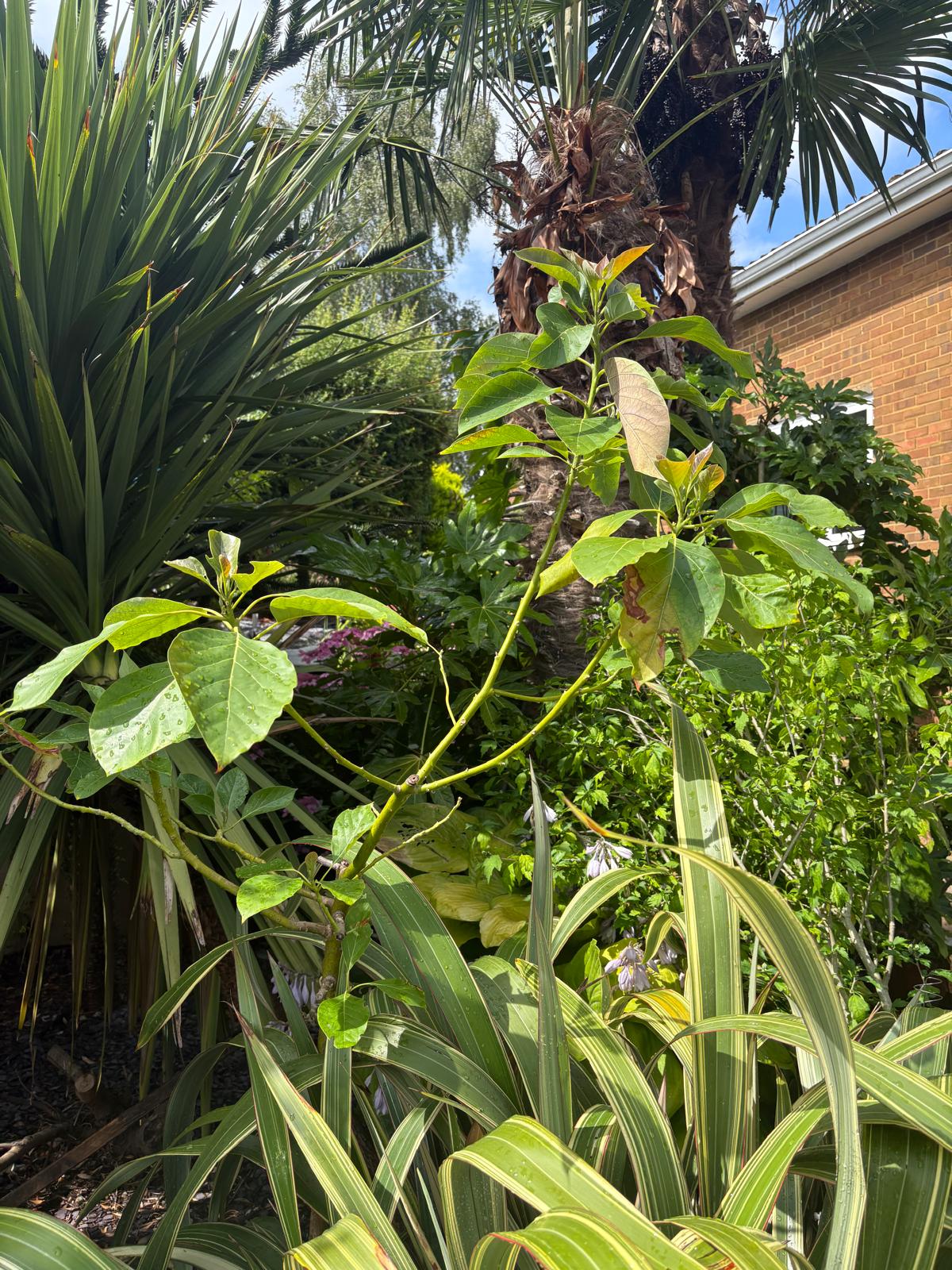
If you don’t feel like growing vegetables why not try sunflowers, Bunnies ears grass or perhaps an avocado stone. Here is a picture of mine which is now 3 years old but I do overwinter it in my green house to stop the frost killing it.
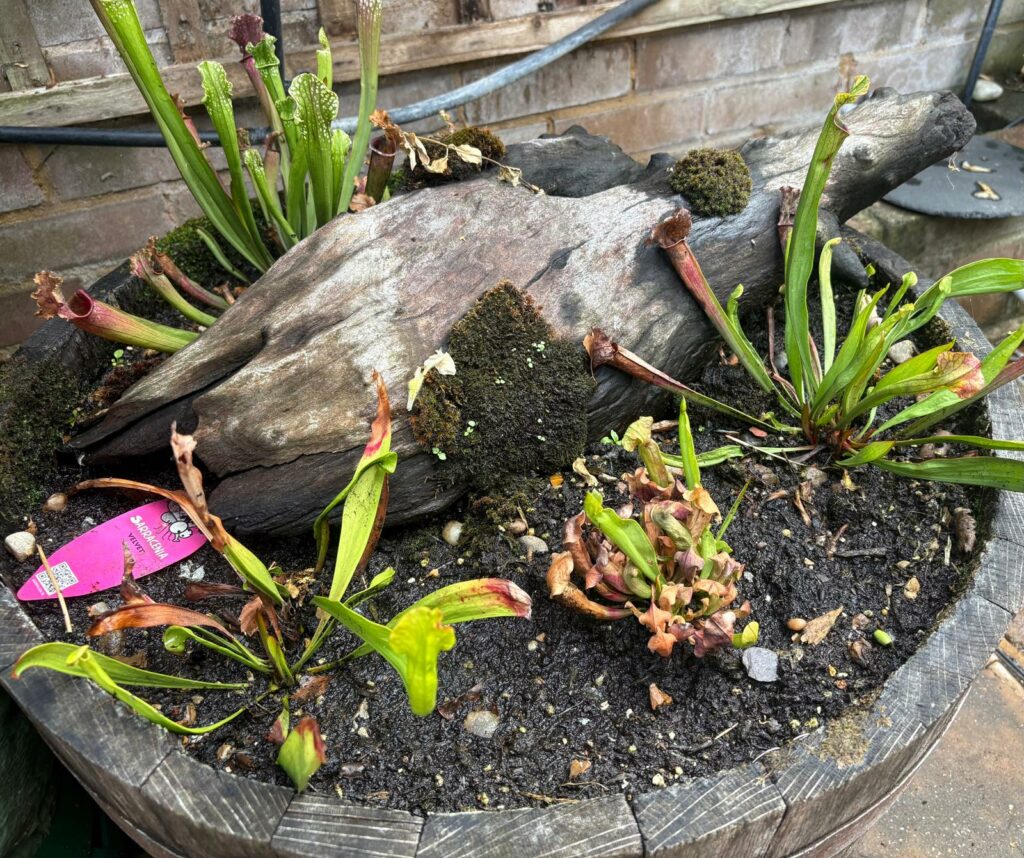
I have planted some Pitcher plants in an old container. Although a little macabre, the grandchildren like to watch the plant digest any unfortunate insects that land inside. These are easy to grow and will survive outside all year round, just make sure they don’t dry out as they live in bogland in the wild.
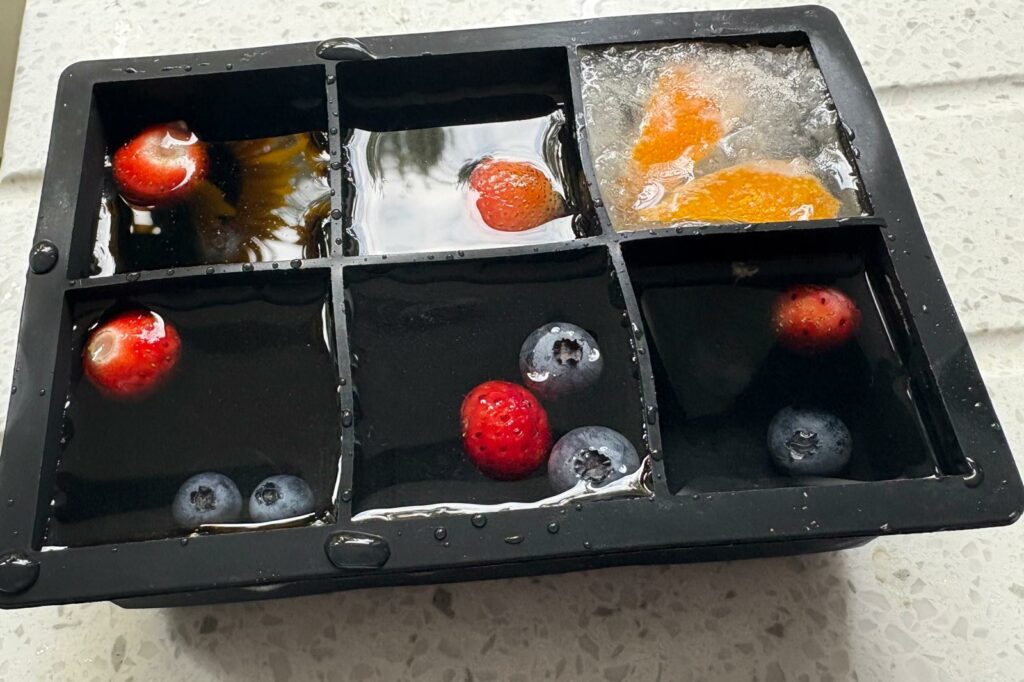
Another idea is to put fruit into an ice cube. I grow strawberries and blue berries which is a nice way of flavouring your drinks when it is hot. The grandchildren love helping me make these. Or make a smoothie from your picked fruit and veg. A friend of mine told me she used one of my raw beetroots, some of my carrots, and added an orange to it to make a nutritious juice.
He has encouraged his four-and-a-half-year-old Archie to plant some carrots from seed and Archie is responsible for watering them giving him an insight into how thing grow and taste.
Or to keep the children entertained in the summer holidays go on a wildlife expedition – probably the best place locally is Bunkers Park. I would take pictures on your phone or get the children take the pictures and identify the insects later at home. Just Google British insects and let the children identify what you have seen. Not only will it entertain them for a few hours, it’s free and gets them outside in the fresh air.
I have made a log pile in my garden the grandchildren love rummaging through the pile seeing what insects they can find.
We are working on the next issue of the Village Voice due out in October. If you want to email in any photographs of your exploits on any of the above, I will try to incorporate it into the next edition of the magazine. Just send the pictures and a short description to Lesley on lgvaoffice@gmail.com
Have a great summer outside and enjoy some quality time with the children.
Happy Gardening!
July 2025
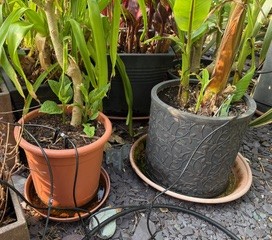
July and August are generally the hottest months of the year, so we should garden accordingly. Keep watering especially pots. I have bought some pot saucers which will help keep any excess water within the pot area and the plant can then draw up the water later in the day when it needs another drink.
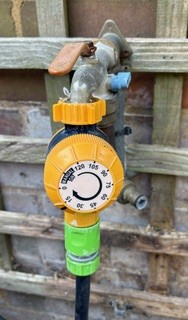
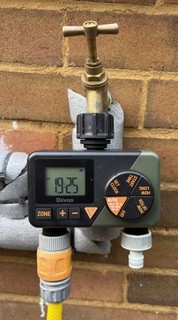
I have also installed a watering system.
This is run by a battery operated timer that can be programmed to come on at various times of the day 1 to 7 days a week. This is invaluable when you go on holiday as you don’t have to ask any neighbours to tend your plants. If you are not great at programming why not try a manual timer and just manually turn it on once a day say early morning or early evening then it is just one trip a day for a friendly neighbour.
DEADHEADING
Keep on top of deadheading your flowers as if you leave them this will encourage the plant to make seed and not produce so many flowers. This is particularly important with roses and sweets peas.
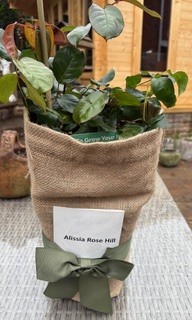
Talking of roses, the Hill family have a new grandchild Alicia Rose Hill. I have found a website that you can name a rose after a loved one or something special. www.worldofroses.com
I would recommend feeding your plants particularly plants in pots once a week this time of year. I use liquid seaweed but there are plenty of alternatives about. Just follow the manufacturer’s instructions and don’t add too much fertiliser, it could burn your plants. Or you could go back to my article last month where I wrote about the benefits of making your own fertiliser with comfrey.
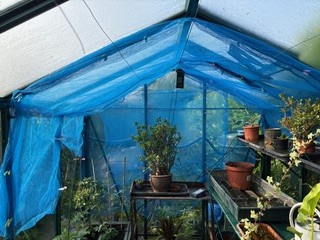
If you have a greenhouse, it’s a good idea to shade some of the panels as at this time of year it could get up to 50 degrees centigrade which is no good at all for your plants fruit or veg. I use netting.
THINGS TO DO THIS MONTH
Keep sowing lettuce, carrots and other veg. for a constant supply throughout the summer and autumn.
Harvest garlic, early potatoes and onions.
Prune stone fruit trees/bushes.
Water well in dry spells.
Lift the lawnmower blades when it gets very hot. This will help retain the moisture in your lawn.
Keep bird baths full of water and leave some easily accessible water for other wildlife to drink in the hot weather.
Keep deadheading.
Feed and watch house plants don’t get scorched on a hot windowsill. Why not give them a holiday and move some of them outside to a suitable position?
Happy Gardening!
June 2025
Summer officially starts on Saturday the 21st of June according to the astronomical calendar. This is the longest day of the year called the Summer Solstice. So, daylight will last approximately 16.5 hours on this day.
So, things in the garden are now growing vigorously and you will need to get watering if we get a dry spell. You will also have to keep on top of weeding as the weeds will be competing for moisture with your plants. This is also the time of year when pests are at their height. PLEASE DON’T USE PESTICIDES as sprays don’t just kill the greenfly, blackfly and other pests, they will also kill the friendly insects like butterflies, moths, bees, and ladybirds.
You can mix a small amount of washing up liquid with water and spray on affected plants. However, what I do is to mix my own organic insecticide.
HOMEMADE ORGANIC PESTICIDE
Pick or buy a garlic
bulb. Crush a clove or
two with black pepper
crush in a pestle and
mortar.
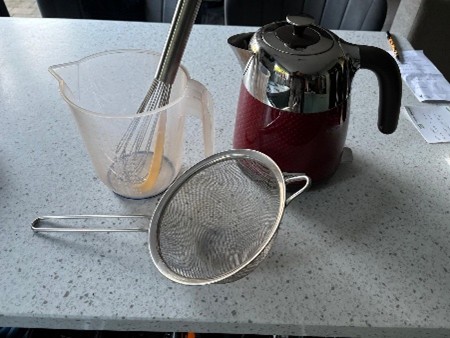
Add boiling water and let the mixture cool down. Vigorously mix using a whisk or liquidise.
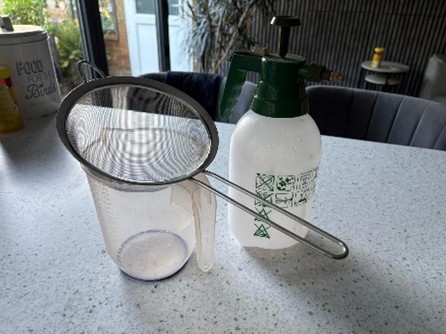
Then sieve and pour into suitable spray device.
Spray on the affected plants or veg, then keep the unused solution for future use. If it becomes lumpy and congealed pop the mixture in the microwave for a couple of minutes to heat up before putting through a sieve again.
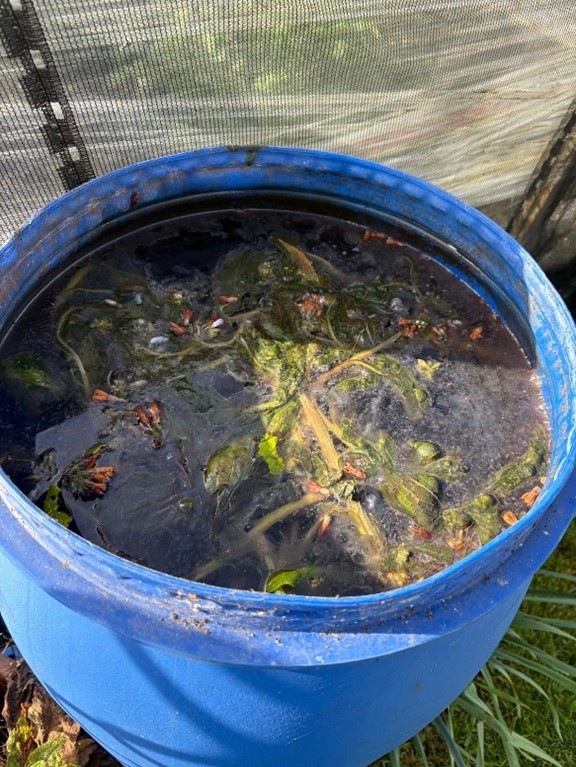
Feeding your plants and produce is important at this time of the year. You can buy fertilisers like tomato feed which is high in potassium which helps the flower and fruit development. Seaweed fertilisers provide a broad range of nutrients and trace elements acting as a general soil improver and promotes plant vigour. I use both, but at the allotment we have comfrey growing. I cut this at the bottom of the stems and place the plants in my water butts. After a couple of weeks, I have free fertiliser.
I sow my sweet corn in blocks not in rows as sweet corn is pollinated by the wind so planting your plants this way will increase your crop.
As soon as your perennials – lupins, delphiniums and ornamental poppies have finished flowering – cut them back to their base and hopefully a new flush of flowers will appear later in the season.
THINGS TO DO THIS MONTH
Keep deadheading and feeding to encourage growth and new flowers.
Stake floppy flowers so they don’t fall over and snap in the wind.
Keep mulching to keep the moisture in the soil.
Water well in dry spells.
Raise the lawnmower blades in drought to help keep the lawn moist.
Shade your greenhouse with netting or fleece.
Don’t cut hedges or bushes as the birds are still nesting.
Sow or plant courgettes, pumpkins, marrows and sweetcorn.
Keep sowing small amounts of salad for a continued supply over the summer.
Harvest first early potatoes.
Happy Gardening!
May 2025
May is my favourite month, not only is it my birthday month but the flower shows open all over the country. The garden is really waking up now, the soil is getting warmer and the days are getting longer, so there is plenty to do this month.
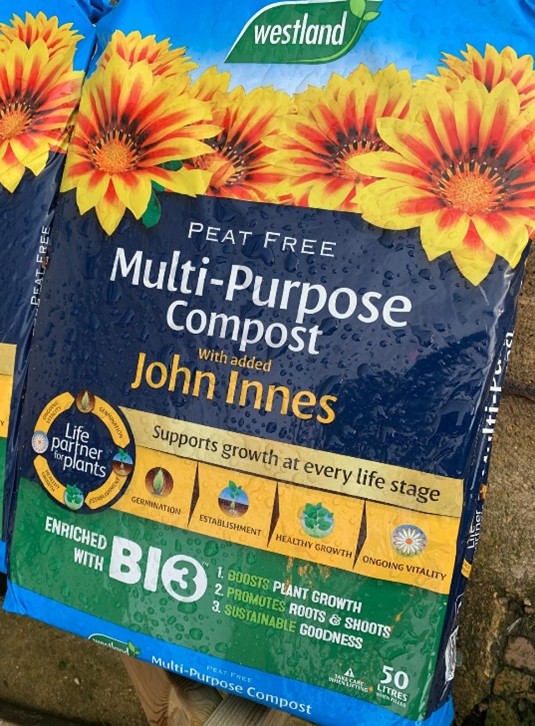
I buy my bedding plants around the middle of May. I also make up my hanging baskets. I buy a good peat free compost from a reputable garden centre. My favourite is John Innes Multi-Purpose Compost.
I mix this with some water saving crystals which when watered turn into a gel. Don’t use to much as it does expand quite a lot. One year I made this mistake and when I watered the finished baskets all the plants fell out of the top as the gel expanded. I also add Osmocote slow release feed pellets, one to each basket.
I will clear all the remaining spring bedding and put on the compost heap. Also dead-head all the spring bulbs once they have finished flowering, as you want all the energy from the foliage to go back into the bulb for next year’s display.
I will plant out my tomato seedlings at the end of the month. I tend to plant them quite deep as I cut off the first set of leaves on the stem and use that as my depth guide. This will create a better root system and ensure the plants fruit prolifically.
Now is a good time to empty your compost bin and spread it over your garden or veg patch. This helps retain moisture in the soil throughout the summer months. It will also enrich the soil over time when the worms do their job of dragging down the compost into the soil.
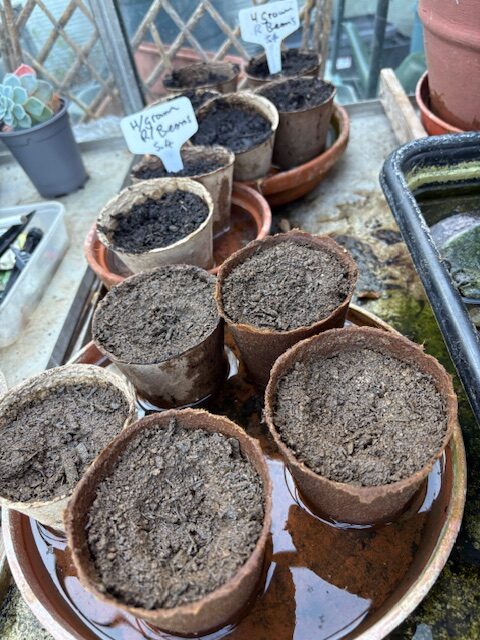
I will be sowing my sweetcorn, courgettes and squash in the greenhouse this month. However if you don’t have a greenhouse or cold frame you could use a window sill. I use coir based pots which make it easier to transplant as you just pop the plant and pot into the ground without damaging the root system. Keep your greenhouse or cold frame well ventilated but close it in the evening as it can still get quite chilly at night this time of year.
I will plant my main crop potatoes now by digging a trench and keep them well watered and harden off all seedlings ready to plant them out by the end of the month. I will also net my strawberry plants to stop the birds from eating the fruits.
THINGS TO DO THIS MONTH
Lower blades on your lawn mower to summer levels.
Treat and feed the lawn.
Sow tender veg.
Harvest asparagus when the spears are at a good height, cutting them just below the surface of the soil.
Keep on top of weeds and pests – please DON’T use pesticides. I make my own organic mix using garlic and black pepper boiled, liquidised then sieved. I then spray it on my plants and veg.
Plant bedding plants and hanging baskets towards the end of the month.
Keep cold frames and greenhouses well ventilated.
Happy Gardening!
April 2025
At last spring is finally here with the days getting longer and the soil warming up nicely. Don’t be fooled we can still get frosts this time of year.
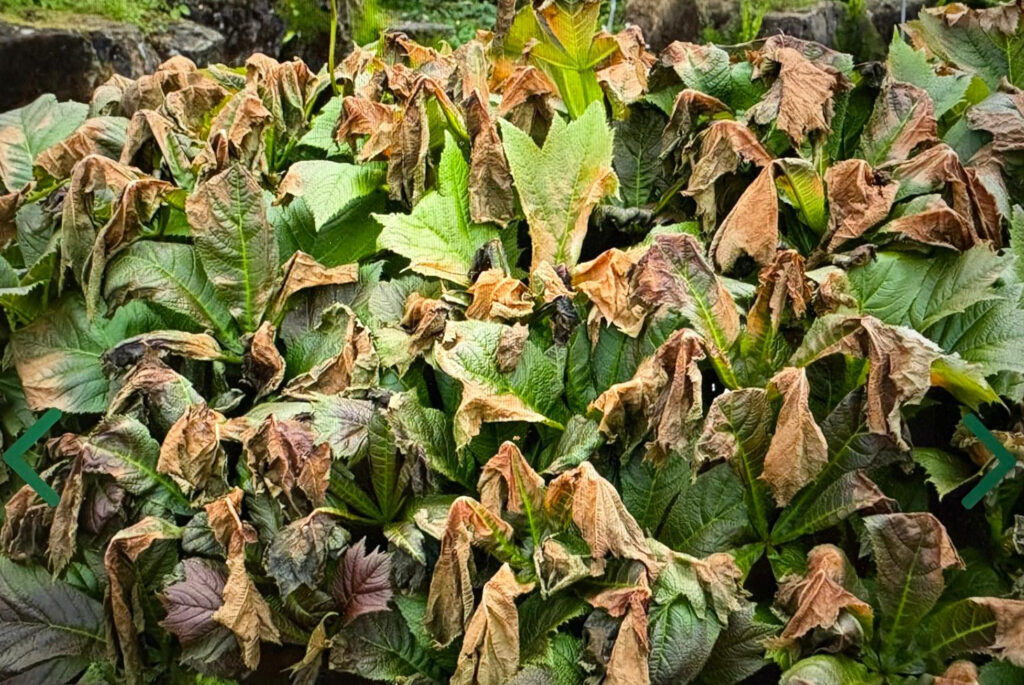
If we get a frost the leaves on the plant or shrub will eventually turn brown so just cut off the offending damaged part of the shrub and it will recover in no time. I still try to keep a fleece on my tender plants until May just to be sure they don’t get frosted.
I always feed my spring bulbs with a tomato feed once they have finished flowering as this will help fertilise the bulb for next year’s display. Don’t forget to nip off the spent flowering heads – if you don’t this will encourage the bulb to make seeds and not concentrate in building up energy for next year.
It is also a good time to get out and prune Winter flowering heathers, forsythia, hardy fuchsias and evergreen hedges. However I tend to leave my hedges until June/July when I know all the birds have finished nesting.
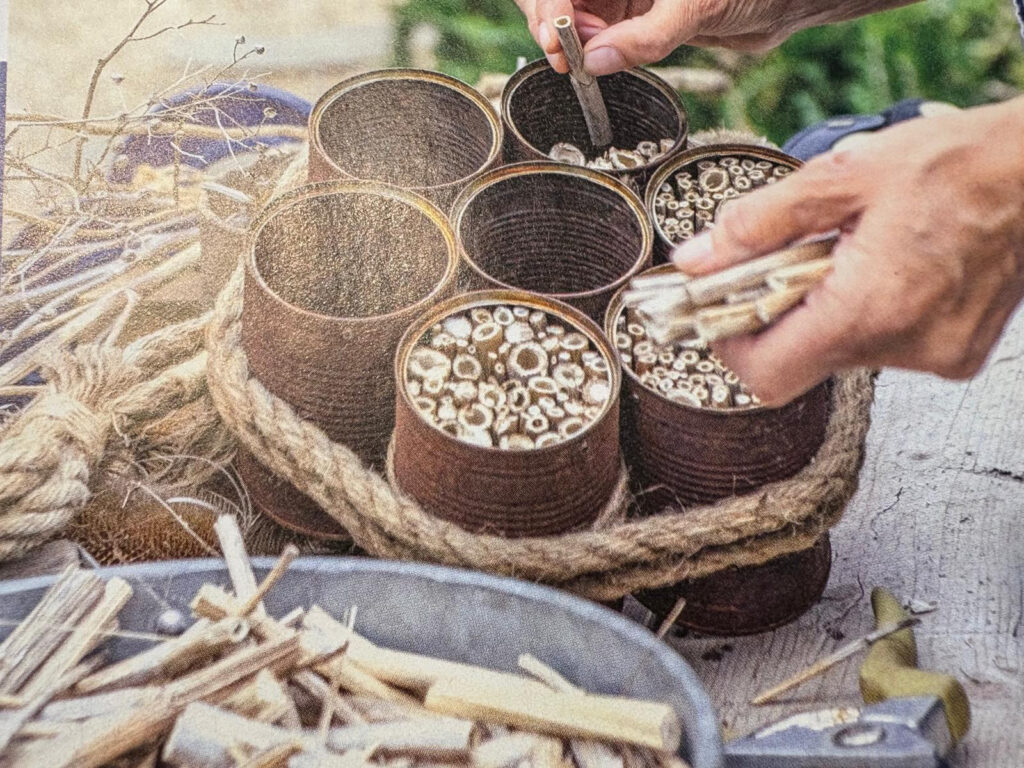
If you have young children why not make a bug hotel with them? You can use some old tin cans tied together or cram them in a box, then just fill them with old sticks of bamboo for the insects to make their home for the summer.
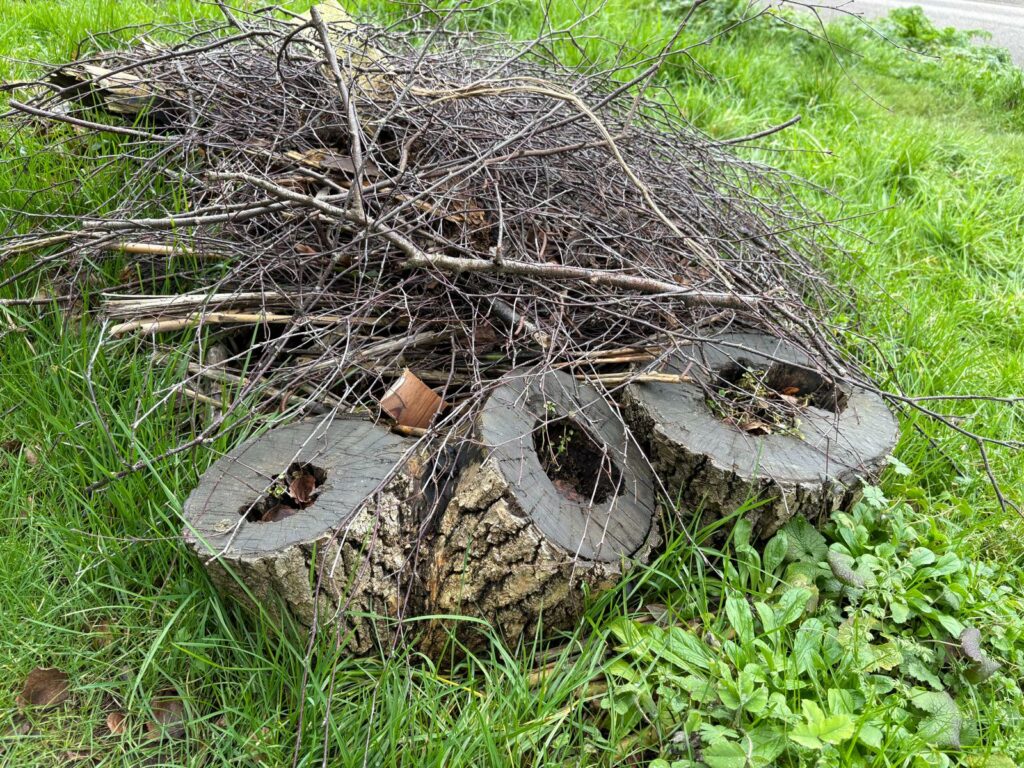
Or just make a pile of old logs and wood somewhere out of the way and keep an eye on what happens through the rest of the year.
The children will love it and it is also educational for them.
THINGS TO DO THIS MONTH
Prune early flowering shrubs.
Repot house plants that have become pot bound.
Keep on top of the dead heading of bulbs.
Start to feed plants – I use a home grown comfrey mix – more next month on this.
Sow hardy veg outdoors.
Sow under cover or indoors courgette, tomatoes and squash.